
Papain / Papaya Enzyme Powder
Lifeworth supplies Papain Enzyme Powder with activity-based specification options, technical documentation, evaluation samples, and bulk supply support for commercial formulation and ingredient sourcing projects.
- Papain Enzyme Powder for Bulk Supply
- Activity-Based Specification Options
- Food, Supplement & Enzyme Blend Applications
- Sample & Technical Document Support
- Bulk Export Supply Available
Tell us your application, target specification, and destination market so we can support grade selection, documentation review, and packaging recommendations.

Quick Specs
Identity
INCI Name
Alias
CAS Number
Quality
Assay
Grade
Standards
Assay Method
Enzyme Activity
Handling
Appearance
Form
Solubility
Applications
Commercial Terms
MOQ
MOQ depends on packaging and specification.
Lead Time
3–7 working days for standard items; bulk orders by schedule.
Incoterms
EXW / FOB / CIF / DAP / DDP
Sample
Free sample (shipping charged)
Quality & Documents
COA (per batch) • SDS/MSDS • TDS/Spec sheet (on request). Additional statements depend on product and market.
Product Overview
Papain powder, also known as papaya enzyme powder, is a proteolytic enzyme ingredient commonly reviewed in food, supplement, cosmetic, and selected industrial sourcing projects.
It is usually supplied on an activity basis, and buyers often review unit system, process compatibility, and document scope before technical or commercial evaluation.
It is commonly considered for food processing, enzyme blend systems, cosmetic formulations, and selected specialty applications, with sample support and bulk supply planning available for sourcing reference.

Applications
Food Processing Systems
Papain powder is commonly reviewed for protein hydrolysis, meat tenderizing, dough or biscuit process adjustment, and selected clarification or processing applications where proteolytic activity is commercially relevant.
Supplement and Enzyme Blend Projects
It may be considered for capsules, tablets, and enzyme blend systems where activity route, handling stability, and formulation fit need to be confirmed before approval.
Cosmetic and Personal-Care Formulations
In selected cosmetic systems, papain may be reviewed where enzyme-based exfoliation or cleansing support is part of the intended formulation strategy.
Selected Industrial or Specialty Uses
For textile, leather, feed, or specialty process applications, buyers often review activity basis, impurity control, and process compatibility rather than consumer-facing positioning.
How to Choose the Right Grade / Form
How to Choose the Right Papain Specification
Activity Level
Papain is commercially supplied with different enzyme activity specifications for food, supplement, cosmetic, enzyme-blend, and selected industrial applications. Buyers should select the required activity according to the intended formulation, process conditions, dosage target, and finished-product requirements rather than assuming that a higher activity value is always the better choice.
Activity Unit & Test Method
Papain activity may be expressed using different unit systems, including MIU/g, TU, USP units, IU, MU, or other supplier-specific activity definitions. Values expressed in different units should not be compared by numerical value alone, because the reported activity can depend on the analytical method, substrate, reaction conditions, calculation basis, and unit definition. When comparing suppliers, buyers should confirm that samples, quotations, and commercial batches are evaluated using the same agreed activity basis.
Application & Process Conditions
The suitable Papain specification should also be reviewed together with the intended pH range, processing temperature, exposure time, dosage form, and interaction with other formulation components. For food processing, supplement blends, cosmetic systems, or other enzyme-sensitive applications, laboratory or pilot evaluation is recommended before commercial scale-up.
Particle & Handling Requirements
Particle size, powder flow, dispersion behavior, moisture exposure, and storage conditions may also affect processing and batch consistency. Buyers should define any specific powder-handling or formulation requirements together with the target enzyme activity before final specification approval.
Technical & Formulation Notes
Technical Notes
Papain is a proteolytic enzyme commonly reviewed on an activity basis rather than simple purity language.
Buyers typically evaluate activity unit, process compatibility, moisture control, and storage handling before supply approval.
Papain and bromelain are both proteolytic enzymes, but they are different enzyme ingredients with different biological sources, activity definitions, and process behavior. They should not be treated as directly interchangeable without formulation or process evaluation.
Manufacturing & Process
Commercial papain powder is generally produced from immature papaya-derived enzyme material through extraction, purification, concentration, and drying according to the intended specification route.
For sourcing review, buyers usually focus more on activity consistency, microbial control, document scope, and packaging protection than on extended process storytelling alone.
Compatibility / Formulation Notes
For food-processing systems, confirm activity route, pH compatibility, and operating temperature during pilot testing.
For enzyme blends, review moisture control, blending uniformity, and storage stability before scale-up.
For cosmetic systems, confirm compatibility with the final base and avoid processing conditions that may reduce enzyme performance.
For storage and transport, keep the material in a cool, dry place away from light and unnecessary humidity exposure.
Extended QC & Test Items
Common review points may include activity basis, appearance, solubility behavior, moisture, heavy metals, microbiological limits, and document scope according to the agreed specification.
Product specifications
| Test | Specification | Method |
|---|---|---|
| Appearance | Light yellow to off-white powder | Visual |
| Identification | Conforms to agreed papain specification | Per specification |
| Activity / Unit Basis | 20 Miu/g to 300 Miu/g or agreed specification | Per specification |
| Loss on Drying | Per agreed specification | Per specification |
| Heavy Metals | Per agreed specification | Per specification |
| Microbiological Limits | Per agreed specification | Per specification |
| Documents | COA per batch; SDS/MSDS and TDS available | Reference |
Storage, Shelf Life & Packaging
Storage
Store in a tightly sealed container in a cool, dry place away from light and humidity.
Avoid unnecessary exposure to heat, moisture, and repeated opening during storage and transport handling.
Shelf Life
The shelf-life period should follow the agreed activity specification, original packaging condition, and recommended storage route.
Batch label, packaging integrity, and storage control should be reviewed before commercial release and long-term warehousing.
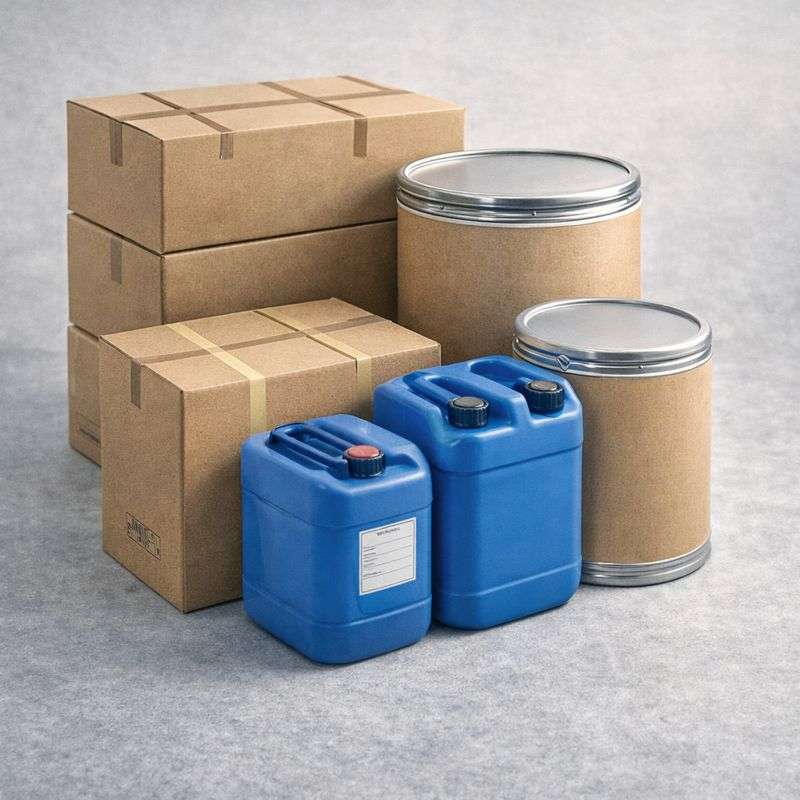
Packaging & Logistics
Sample Packing
Small evaluation packs can be arranged for activity confirmation and pilot review.
Bulk Packing
Bulk packaging can be arranged according to activity route, order volume, and application requirements.
Customization
Packaging format, labeling, OEM or ODM support, and document pack can be discussed according to project scope.
Logistics & Documents
Lead time, incoterms, and document scope should be confirmed according to order quantity and destination market.
Supply, Documentation & Customization
Documents & Compliance
COA, SDS/MSDS, and TDS/spec sheet available based on product and market requirements.
Customization & Private Label
Custom packing, private label, and labeling support available depending on product type and order scope.
Commercial Support
Sample, lead time, and incoterm options can be discussed according to destination market and supply plan.
Why Source From Lifeworth
Activity-based specification support
Support for buyers who need clearer sourcing discussion around papain activity route, unit system, and application fit.
Batch documentation support
COA, SDS/MSDS, TDS/spec sheet, and selected commercial documents can be coordinated according to project scope.
Bulk supply and customization discussion
Packaging route, OEM or ODM scope, and order planning can be aligned with project requirements and destination-market needs.
Export-ready commercial coordination
Support for sample review, quotation, and commercial supply planning from initial evaluation to shipment arrangement.

FAQ
What activity specifications are available for Papain Powder?
Papain Powder can be supplied with different enzyme activity specifications according to the intended application and commercial requirement. Activity ranges such as 20–300 MIU/g may be available depending on the selected specification, but the required activity should always be confirmed together with the analytical method and unit basis.
Can Papain activity values in MIU/g, TU, USP units, IU, or MU be compared directly?
Not necessarily. MIU/g, TU, USP units, IU, MU, and other activity expressions may use different analytical methods, substrates, reaction conditions, or unit definitions. Buyers should therefore avoid comparing the numerical value alone and should confirm the corresponding test method and activity basis before evaluating different Papain suppliers.
What is the difference between Papain and Bromelain?
Papain and Bromelain are both proteolytic enzymes, but they are different enzyme ingredients from different botanical sources. Papain is derived from papaya, while Bromelain is primarily associated with pineapple. Their activity units, analytical methods, process behavior, and formulation suitability may differ, so they should not be treated as directly interchangeable without technical evaluation.
Is Papain suitable for food and supplement formulations?
Yes. Papain is commonly considered for selected food-processing, dietary supplement, enzyme-blend, and nutritional formulations. The appropriate activity level and dosage should be selected according to the intended function, formulation system, processing conditions, and applicable market requirements.
Can Papain Powder be used in cosmetic formulations?
Papain may be considered for selected cosmetic and personal-care formulations where proteolytic enzyme activity is required. Formulation teams should evaluate enzyme activity, pH, temperature, compatibility with other ingredients, finished-product stability, and destination-market requirements before commercial use.
What should buyers check when comparing Papain suppliers?
Buyers should review the stated enzyme activity together with the activity unit, analytical method, particle characteristics, microbiological limits, heavy metals, moisture-related parameters, application requirements, and batch documentation. A higher reported activity number does not necessarily indicate a better product if the analytical basis is different.
Can Lifeworth provide Papain samples and technical documents?
Yes. Evaluation samples can be arranged for formulation testing and supplier qualification. Available support may include COA, TDS, SDS, product specifications, activity information, packaging details, and other technical or quality documents according to the selected Papain specification.
Need more answers?
Explore our full FAQ library for documentation, compliance, shipping, and ordering guidelines.