
Phosphatidylserine Powder
Lifeworth supplies Phosphatidylserine Powder in multiple assay grades for formulation evaluation and bulk sourcing, with grade selection based on target PS loading, dosage format and project requirements.
- Phosphatidylserine 20%, 50% and 70%
- HPLC assay options
- Food / Supplement Grade
- COA, SDS and TDS support
- Samples and bulk supply available
Tell us your application, target specification, and destination market so we can support grade selection, documentation review, and packaging recommendations.

Quick Specs
Identity
INCI Name
Alias
CAS Number
Quality
Assay
Grade
Standards
Assay Method
Handling
Appearance
Form
Solubility
Applications
Commercial Terms
MOQ
MOQ depends on packaging and specification.
Lead Time
3–7 working days for standard items; bulk orders by schedule.
Incoterms
EXW / FOB / CIF / DAP / DDP
Sample
Free sample (shipping charged)
Quality & Documents
COA (per batch) • SDS/MSDS • TDS/Spec sheet (on request). Additional statements depend on product and market.
Product Overview
Phosphatidylserine Powder is a standardized phospholipid ingredient commonly used in dietary supplement and functional nutrition formulations.
It is typically supplied in defined PS assay grades such as 20%, 50% and 70%, and buyers commonly review assay level, source, dosage form and batch specification before technical or commercial evaluation.
It is mainly considered for capsules, tablets, powder blends and selected nutrition formulations, with samples, batch documentation and bulk supply support available for sourcing projects.

Applications
Phosphatidylserine Powder is mainly selected for supplement and nutrition projects requiring standardized PS content. The appropriate assay grade should be matched to target dosage, product format and available formulation space.
Dietary Supplements
Suitable for capsules and tablets where a defined phosphatidylserine dose is required. Higher-assay grades can help reduce the amount of raw material needed when capsule fill weight or tablet size is limited.
Powder Blends & Sachets
Suitable for dry powder blends, sachets and premix systems containing other nutritional ingredients. Buyers should evaluate blend uniformity, target PS content per serving and compatibility with the overall formulation.
Functional Nutrition
Can be considered for selected functional nutrition and fortified product systems where standardized phosphatidylserine content is required. Processing conditions and finished-product stability should be reviewed during formulation development.
Specialized Nutrition Formulations
Can also be evaluated for other nutrition-oriented formulation projects according to target specification, processing conditions and applicable regulatory requirements.
How to Choose the Right Grade / Form
Phosphatidylserine Powder is commonly supplied in different assay grades. Grade selection should be based on target PS dosage, available formulation space and the amount of raw material required to reach the finished-product target.
PS 20%
Recommended where formulation space is relatively flexible and a lower-assay PS ingredient can be used to reach the required active level. It is commonly considered for general supplement and nutrition formulations.
PS 50%
Recommended when higher active loading is preferred while maintaining formulation flexibility. Compared with PS 20%, it reduces the raw material quantity required to achieve the same PS target.
PS 70%
Recommended where higher PS concentration and lower raw material usage are important. It is particularly useful when capsule fill weight, tablet size or serving size is more restricted.
Example: Raw Material Required for a 100 mg PS Target
For a theoretical target of 100 mg phosphatidylserine:
- PS 20%: approximately 500 mg raw material
- PS 50%: approximately 200 mg raw material
- PS 70%: approximately 143 mg raw material
Actual formulation quantities should be calculated according to the confirmed assay of the selected batch and the required finished-product specification.
How to Choose the Right Specification
Choosing the right Phosphatidylserine specification involves more than selecting 20%, 50% or 70%. Buyers should also confirm the assay basis, raw material source and batch-level quality requirements applicable to the finished project.
Confirm the Assay Basis
Review the stated PS percentage together with the analytical method and applicable specification. The nominal grade should correspond with the actual assay reported on the batch COA.
Confirm the Raw Material Source
Source can be an important purchasing consideration for formulation, labeling, allergen or market-positioning requirements. The current product is supplied as soy-derived Phosphatidylserine Powder, and alternative-source requirements should be confirmed before quotation.
Confirm Batch Specification and Market Requirements
Moisture, purity, safety parameters, microbiological limits and other test items may vary by grade or project. Buyers should compare the product specification and batch COA with their formulation and destination-market requirements before commercial approval.
Technical & Formulation Notes
Technical Notes
Commercial Phosphatidylserine Powder is primarily evaluated according to PS assay, analytical method, raw material source and batch specification. PS 20%, 50% and 70% represent different active-loading options and should be reviewed together with the relevant product specification and batch COA rather than by nominal grade alone.
Manufacturing & Process
Phosphatidylserine Powder should be sourced according to a defined raw material source, standardized PS content and controlled commercial specification. Buyers evaluating a new supply source should confirm that the grade, assay basis and batch documentation remain consistent with the requirements established during sample or pilot evaluation.
Compatibility / Formulation Notes
Phosphatidylserine Powder should be evaluated under the actual dosage form and manufacturing conditions intended for the finished product.
For Capsules and Tablets
Consider target PS dosage, assay grade, available fill weight and compatibility with other formulation ingredients. Higher-assay grades may be useful where dosage-space efficiency is important.
For Powder Blends and Sachets
Evaluate blend uniformity, ingredient compatibility and target PS content per serving. Pilot blending is recommended before commercial scale-up.
For Functional Nutrition Systems
Compatibility with the broader formulation, processing conditions and finished-product stability should be evaluated under the intended manufacturing process.
For Pilot Testing and Scale-Up
The grade used during formulation evaluation should be matched as closely as possible to the specification intended for commercial production. Batch documentation should be reviewed before scale-up to confirm assay and relevant quality parameters.
Extended QC & Test Items
Key quality-control items may include appearance, identification, phosphatidylserine assay, moisture or loss on drying, and other applicable purity, safety or microbiological parameters. Exact test items and limits should follow the agreed product specification and batch COA, with additional testing confirmed according to application or destination-market requirements.
Product specifications
| Test | Specification | Method |
|---|---|---|
| Appearance | Light yellow to yellow powder | Visual |
| Identification | Conforms to specification | Per specification |
| Phosphatidylserine Assay | 20%, 50% or 70%, according to selected grade | HPLC |
| Moisture / Loss on Drying | Per agreed specification | Per specification |
| Additional Quality Parameters | Per agreed specification / batch COA | Per specification |
Storage, Shelf Life & Packaging
Storage
Store Phosphatidylserine Powder in a cool, dry place in a tightly sealed container. Protect the product from direct sunlight, heat and moisture, and minimize unnecessary exposure to air during handling.
Shelf Life
Shelf life should follow the applicable product specification and packaging conditions. Buyers should refer to the relevant specification and shipment documentation for the confirmed shelf-life period.
Packaging & Logistics
Phosphatidylserine Powder can be supplied from initial evaluation quantities through commercial bulk orders, with packing and documentation arranged according to the selected grade and project requirements.
Sample Packing
Evaluation samples can be arranged for supplier qualification, formulation testing and initial quality review before commercial purchasing.
Bulk Packing
Standard export packaging is available for commercial quantities of PS 20%, 50% and 70%. Exact packing format should be confirmed according to order quantity and supply arrangement.
Customization
Assay grade, source requirement, packaging format and additional testing requirements can be discussed according to project needs and actual supply capability.
Logistics & Documents
International shipments can be arranged by courier, air freight, sea freight or other suitable methods depending on order size and destination. COA, SDS, TDS and relevant export or product documents can be coordinated with the shipment.
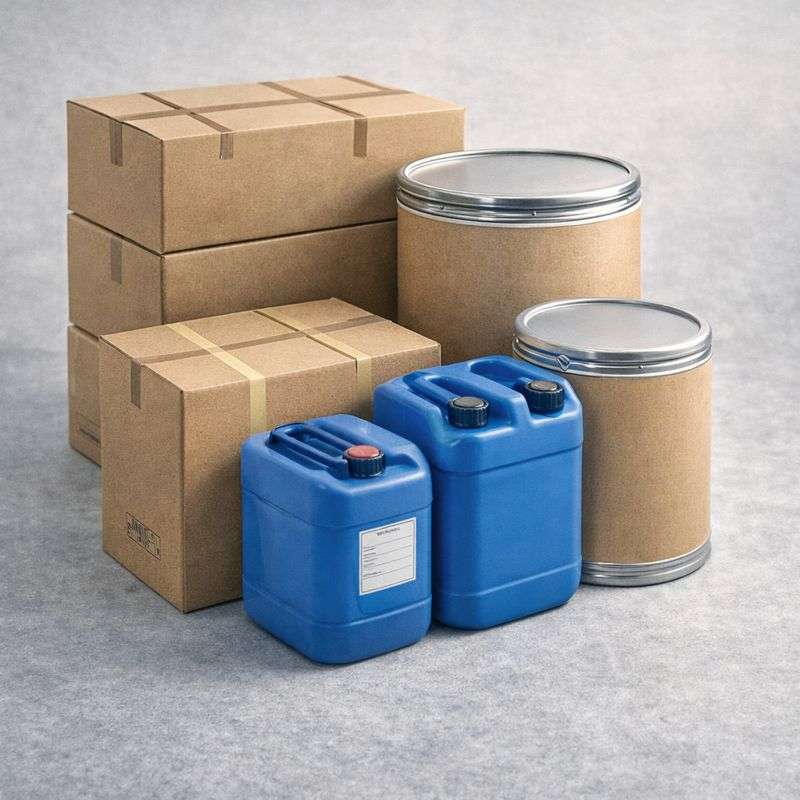
Supply, Documentation & Customization
Documents & Compliance
COA, SDS/MSDS, and TDS/spec sheet available based on product and market requirements.
Customization & Private Label
Custom packing, private label, and labeling support available depending on product type and order scope.
Commercial Support
Sample, lead time, and incoterm options can be discussed according to destination market and supply plan.
Why Source From Lifeworth
Lifeworth supports Phosphatidylserine Powder sourcing with clear assay options, batch documentation and supply coordination from evaluation through commercial purchasing.
Defined Assay Options
PS 20%, 50% and 70% are available for different target active levels and formulation-space requirements.
Specification-Focused Selection
Grade selection can be reviewed according to target PS loading, dosage form and project specification rather than assay percentage alone.
Batch Documentation Support
COA, SDS, TDS and relevant product specifications can be provided for supplier evaluation and commercial review.
Sample-to-Bulk Supply
Evaluation quantities and commercial bulk orders can be coordinated together with packaging, shipping terms and export documentation.

FAQ
What grades of Phosphatidylserine Powder are available?
Phosphatidylserine Powder is available in PS 20%, 50% and 70% assay grades. The suitable grade depends on target PS dosage, formulation space, dosage form and project requirements.
How do I choose between Phosphatidylserine 20%, 50% and 70%?
The main difference is the amount of raw material required to reach the same target PS level. Higher-assay grades require less material and may be more suitable where capsule, tablet or serving-size space is limited.
Is Phosphatidylserine Powder available for bulk supply?
Yes. Phosphatidylserine Powder can be supplied for evaluation, pilot-scale projects and commercial bulk orders. Pricing and packing depend on assay grade, quantity and shipping requirements.
Can I request a sample before placing a bulk order?
Yes. Evaluation samples can be arranged for quality review, formulation testing and supplier qualification before commercial purchasing.
Is the Phosphatidylserine Powder soy-derived?
The current product is supplied as soy-derived Phosphatidylserine Powder. If a soy-free or alternative-source specification is required, the source requirement should be confirmed before quotation and sample arrangement.
What documents are available for commercial evaluation?
COA, SDS, TDS and relevant product specifications can be provided for supplier evaluation and commercial purchasing. Additional documentation can be discussed according to the application, destination market and customer approval requirements.
Need more answers?
Explore our full FAQ library for documentation, compliance, shipping, and ordering guidelines.