
Astaxanthin Powder
Astaxanthin powder is supplied for buyers who need a dry-form natural astaxanthin option for formulation and sourcing review. Procurement teams usually assess astaxanthin content, application fit, packaging format, and document scope before sample or bulk discussion.
- Natural astaxanthin powder from Haematococcus pluvialis
- Suitable for capsules, tablets, sachets, and premix systems
- Multiple content options can be discussed by project
- Sample support and standard commercial documents available
Tell us your application, target specification, and destination market so we can support grade selection, documentation review, and packaging recommendations.
Quick Specs
Identity
INCI Name
Alias
CAS Number
Molecular Formula
Molecular Weight
Quality
Assay
Grade
Standards
Assay Method
Handling
Appearance
Form
Solubility
Applications
Commercial Terms
MOQ
MOQ depends on packaging and specification.
Lead Time
3–7 working days for standard items; bulk orders by schedule.
Incoterms
EXW / FOB / CIF / DAP / DDP
Sample
Free sample (shipping charged)
Quality & Documents
COA (per batch) • SDS/MSDS • TDS/Spec sheet (on request). Additional statements depend on product and market.
Product Overview
Astaxanthin powder is a natural carotenoid ingredient commonly used in supplement, food, beverage, and cosmetic sourcing projects that require dry-form astaxanthin supply.
It is usually supplied as Haematococcus pluvialis-derived powder under agreed specification, and buyers often review astaxanthin content, dosage-form fit, and packaging format before technical or commercial evaluation.
It is commonly considered for capsules, tablets, sachets, and selected premix systems, with sample support and standard commercial documents available for sourcing reference.

Applications
Capsules
Suitable for capsule projects where natural astaxanthin powder is preferred for dry filling and solid-form supplement development. Buyers usually evaluate content range, flow behavior, and packing fit for this type of application.
Tablets
Suitable for tablet projects where astaxanthin powder is used as part of a dry compression or granulation-based supplement system. Buyers often review formulation compatibility and content alignment before pilot testing.
Sachets and Solid Beverage Systems
Suitable for sachets, powdered drink concepts, and selected dry nutritional systems where a powdered carotenoid ingredient is easier to integrate into the formulation workflow.
Premix and Functional Formulation Projects
Suitable for selected premix and functional ingredient projects where natural-source astaxanthin powder is being evaluated as part of a broader formulation design.
Cosmetic Formulation
Natural astaxanthin powder can be evaluated for cosmetic formulations where antioxidant ingredients are incorporated into skincare products such as creams, serums, and related formulations.
Aquaculture Feed
Astaxanthin powder is also used in aquaculture feed applications where natural pigmentation and carotenoid supplementation are required.
How to Choose the Right Grade / Form
Astaxanthin Powder may be supplied with different astaxanthin content levels and commercial specifications according to formulation requirements, dosage form, application objectives and cost considerations. Buyers should select the suitable specification based on the finished product design rather than focusing only on the astaxanthin percentage.
| Criteria | Lower Content Specification | Standard Content Specification | Higher Content Specification | Customized Specification |
|---|---|---|---|---|
| Typical Astaxanthin Content | 1%-2.5% astaxanthin content, commonly selected for formulations where dosage level and cost balance are important. | 3%-5% astaxanthin content, providing a balance between active content, formulation flexibility and commercial practicality. | 10% astaxanthin content or higher, suitable for projects requiring higher concentration and lower ingredient dosage. | Content level and product parameters reviewed according to specific formulation requirements. |
| Product Positioning | Suitable for general supplement and functional ingredient projects where a cost-effective natural astaxanthin option is required. | Commonly considered for mainstream supplement formulations requiring a balance of potency and handling. | Suitable for premium formulations or applications where higher astaxanthin concentration is preferred. | Developed for specific market positioning, formulation targets or existing product matching. |
| Formulation Consideration | May require higher inclusion levels to achieve the target astaxanthin amount in the finished product. | Offers practical flexibility for capsules, tablets, sachets and dry formulation systems. | Allows lower usage levels while maintaining the required astaxanthin input. | Parameters such as content, particle characteristics and handling properties can be reviewed according to project needs. |
| Potential Application Direction | General dietary supplements, functional blends and cost-sensitive formulation projects. | Capsules, tablets, nutritional blends and commercial supplement products. | Premium supplements and formulations requiring concentrated astaxanthin content. | Specialized projects requiring specification adjustment or formulation matching. |
| Buyer Check | Confirm astaxanthin content, carrier information, analytical method and application suitability. | Confirm content consistency, testing method, documentation package and batch-to-batch stability. | Confirm analytical basis, production capability, stability data and commercial availability. | Confirm MOQ, development requirements, sample evaluation and production feasibility. |
Confirm Astaxanthin Content and Analytical Method
Astaxanthin percentage is one of the primary factors used for commercial selection. Buyers should confirm whether the reported content is measured by UV or HPLC and ensure the analytical basis matches their formulation requirements.
Review Source and Product Form
Natural astaxanthin powder is commonly derived from Haematococcus pluvialis. Buyers should also review the source, powder characteristics, carrier system where applicable and compatibility with the intended dosage form.
Consider Application Requirements Before Selecting Specification
A higher astaxanthin content does not always represent the most suitable option. The preferred specification depends on the target dosage, formulation process, product positioning and manufacturing considerations.
Evaluate Commercial Supply Requirements
For long-term sourcing projects, buyers should confirm sample availability, specification consistency, documentation support and production feasibility before moving to commercial supply.
For capsule and tablet projects
Buyers usually start by confirming the target astaxanthin content and whether the powder form fits the intended filling, blending, or compression workflow.
For sachet and beverage powder projects
The key review points are often content basis, dispersibility expectations, and how the powder behaves in the final dry-form system.
For projects comparing powder and oil
Powder is usually the better choice when the project is built around dry handling, solid dosage forms, or premix-based production rather than oil-phase incorporation.
Technical & Formulation Notes
Technical Notes
Buyers usually review astaxanthin content basis, powder appearance, handling suitability, and formulation fit according to the intended application.
For commercial projects, agreed specification is often more practical than fixing every non-critical parameter too early.
Manufacturing & Process
Compatibility / Formulation Notes
For capsules and tablets, pilot testing is recommended to confirm filling performance, blend uniformity, and compatibility with the final dosage-form system.
For powder blends and sachets, buyers should verify dispersibility, color impact, and formulation balance under actual process conditions.
For beverage powder and premix systems, the ingredient should be reviewed within the full formula rather than judged in isolation.
Storage and handling should minimize unnecessary exposure to heat, moisture, and direct light during warehousing and production use.
Specification and formulation review should be aligned before scale-up, especially when multiple content options are under discussion.
Extended QC & Test Items
Depending on project requirements, QC review may include appearance, astaxanthin assay, moisture-related control points, sensory characteristics, and agreed specification items.
COA, TDS/spec sheet, and SDS/MSDS can be discussed according to product type and destination market.
Product specifications
| Test | Specification | Method |
|---|---|---|
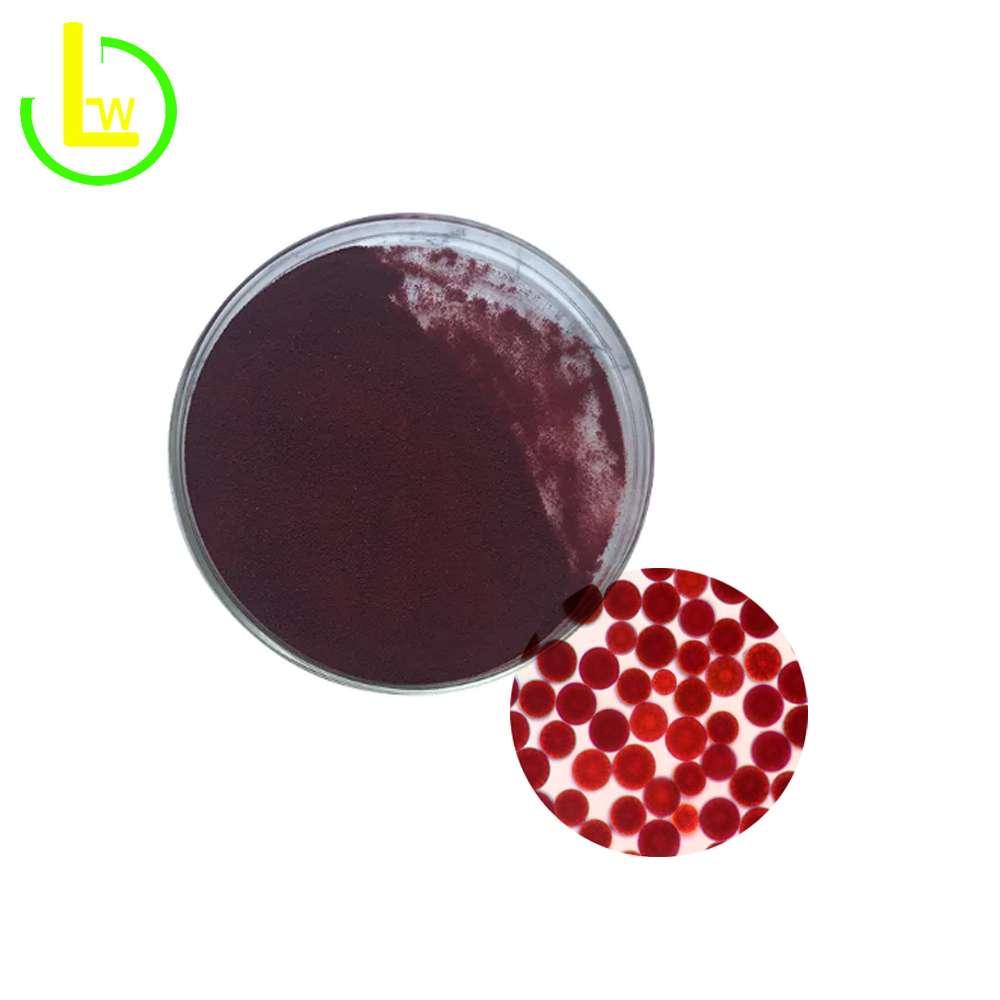
| Appearance | Dark red to reddish powder | Visual |
| Astaxanthin Assay | Per agreed specification | Per specification |
| Source | Haematococcus pluvialis | Reference |
| Moisture | Per agreed specification | Per specification |
| Particle / Powder Form | Per agreed specification | Per specification |
| Packing Form | Sample pack / bulk pack | Supply option |
Storage, Shelf Life & Packaging
Storage
Store in a cool, dry place in a tightly sealed container.
Protect from direct light, heat, and moisture.
Shelf Life
Shelf life should be confirmed according to the applicable specification and packing condition.
Packaging & Logistics
Sample Packing
Small sample packs can be arranged for evaluation and initial formulation review.
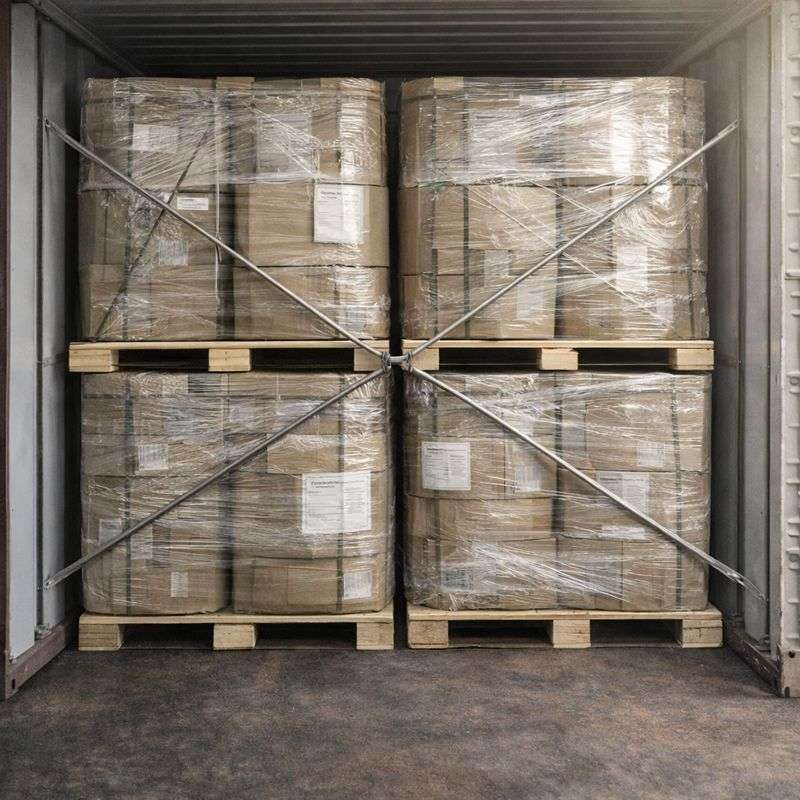
Bulk Packing
Bulk packing can be discussed according to order quantity, powder specification, and shipment plan.
Customization
Selected packing, labeling, and project-specific supply discussion may be available depending on the application and market requirement.
Logistics & Documents
COA, SDS/MSDS, TDS/spec sheet, and standard shipment-related documentation can be discussed according to project scope and destination market.
Supply, Documentation & Customization
Documents & Compliance
COA, SDS/MSDS, and TDS/spec sheet available based on product and market requirements.
Customization & Private Label
Custom packing, private label, and labeling support available depending on product type and order scope.
Commercial Support
Sample, lead time, and incoterm options can be discussed according to destination market and supply plan.
Why Source From Lifeworth
Defined supply scope
Clear communication on agreed specification and content scope for commercial review.
Practical sample and packing support
Support for sample review and bulk packing discussion based on project needs.
Batch-related documentation support
Commercial documents can be arranged for technical, quality, and purchasing review.
Export-oriented sourcing communication
Supply discussion can be aligned with destination market and repeat-order planning.

FAQ
1) What is astaxanthin powder commonly used for?
It is commonly reviewed for capsules, tablets, sachets, solid beverage systems, and selected premix or functional formulation projects.
2) Is this astaxanthin powder from Haematococcus pluvialis?
Yes, this page is positioned for natural astaxanthin powder derived from Haematococcus pluvialis.
3) Can different astaxanthin content options be discussed?
Yes, different content options may be discussed according to the project requirement and specification direction.
4) Is sample available?
Yes, sample support can be discussed for evaluation.
5) What documents can be provided?
COA, SDS/MSDS, and TDS/spec sheet can be discussed according to the project requirement.
6) How should astaxanthin powder be stored?
It should be stored in a cool, dry, sealed condition away from direct light, heat, and moisture.
Need more answers?
Explore our full FAQ library for documentation, compliance, shipping, and ordering guidelines.