
Royal Jelly Powder
Lifeworth supplies freeze-dried / lyophilized royal jelly powder with defined 10-HDA specifications, HPLC testing, specification matching, and documentation support for technical evaluation, sampling, and commercial purchasing.
- Freeze-Dried / Lyophilized Royal Jelly Powder
- 4% / 5% / 6% 10-HDA Options
- HPLC Quality Control
- Specification & Particle Size Matching
- Sample & Bulk Supply Support
Tell us your application, target specification, and destination market so we can support grade selection, documentation review, and packaging recommendations.

Quick Specs
Identity
INCI Name
Alias
Quality
Assay
Grade
Assay Method
Handling
Appearance
Form
Solubility
Applications
Commercial Terms
MOQ
MOQ depends on packaging and specification.
Lead Time
3–7 working days for standard items; bulk orders by schedule.
Incoterms
EXW / FOB / CIF / DAP / DDP
Sample
Free sample (shipping charged)
Quality & Documents
COA (per batch) • SDS/MSDS • TDS/Spec sheet (on request). Additional statements depend on product and market.
Product Overview
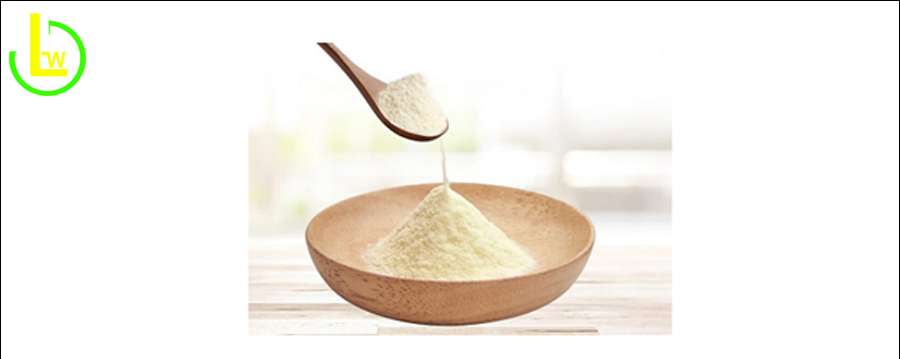
Royal Jelly Powder is a freeze-dried bee-derived ingredient produced from fresh royal jelly and commonly used in dietary supplement, functional food, and selected formulation projects.
It is typically supplied as a lyophilized powder with defined 10-HDA specifications, and buyers often review 10-HDA content, analytical method, particle size, microbiological quality, and supporting documentation before technical or commercial evaluation.
It is commonly considered for capsules, tablets, sachets, powder blends, and other nutritional formulations, with sample evaluation, specification matching, and bulk supply support available for sourcing projects.
Applications
Dietary Supplements
Freeze-dried royal jelly powder is commonly used in capsules, tablets, sachets, stick packs, and nutritional powder blends. Buyers typically select the specification according to target 10-HDA content, dosage design, particle size, and finished-product positioning.
Functional Food & Powder Blends
Royal jelly powder can be incorporated into selected functional food, powdered drink, and nutritional premix systems where a dry, standardized royal jelly ingredient is preferred. Formulation teams should review flavor impact, moisture sensitivity, dispersion behavior, and compatibility with other ingredients during pilot evaluation.
Cosmetics & Personal Care
Royal jelly powder may also be considered for selected skincare and personal-care formulations using bee-derived ingredients. For cosmetic projects, formulation compatibility, appearance, odor, stability, processing conditions, and destination-market requirements should be evaluated before commercial scale-up.
How to Choose the Right Grade / Form
10-HDA Target
Freeze-dried Royal Jelly Powder is commercially available with different 10-HDA specifications, with 4%, 5%, and 6% among the commonly offered levels. The suitable target should be selected according to the finished-product specification, formulation requirement, customer positioning, and commercial project rather than assuming that a higher percentage is automatically the better choice.
Analytical Basis
The stated 10-HDA value should be reviewed together with the analytical method and batch specification. HPLC is commonly used for 10-HDA determination, so quotations, samples, and commercial batches should be compared using the same agreed analytical basis.
Particle Size and Concentration Basis
Particle-size requirements such as 80 mesh may be relevant for capsules, tablets, sachets, and powder-blend systems. Some projects may also specify a fresh-royal-jelly equivalent or concentration ratio such as 3:1; where required, the ratio definition should be confirmed with the supplier rather than treated as a universal Royal Jelly Powder grade.
Compliance and Destination-Market Requirements
For supplement, food, or cosmetic projects, buyers may also need to review microbiological limits, pesticide residues, heavy metals, allergen information, Halal status, Non-GMO statements, alcohol-free documentation, and other destination-market requirements before final specification approval.
Technical & Formulation Notes
Technical Notes
10-HDA is one of the key specification parameters used when evaluating freeze-dried Royal Jelly Powder. Buyers should review the stated 10-HDA target together with the analytical method, batch specification, and relevant quality limits rather than comparing products by percentage alone.
Manufacturing & Process
Royal Jelly Powder is produced from fresh royal jelly through freeze-drying / lyophilization to reduce moisture and convert the material into a dry form suitable for handling, formulation, storage, and commercial supply. Milling and sieving may be applied according to the required powder specification.
Compatibility / Formulation Notes
Capsules and Tablets
For capsules and tablets, buyers should review particle size, flowability, bulk density, moisture sensitivity, and blending behavior with other formulation components. Pilot evaluation is recommended when the formulation has specific compression, filling, or content-uniformity requirements.
Powder Blends and Sachets
For nutritional powder blends, sachets, and stick packs, royal jelly powder should be evaluated for dispersion, flavor contribution, moisture sensitivity and powder condition, and compatibility with other dry ingredients. Appropriate moisture-barrier packaging may also be important for maintaining powder condition during storage.
Beverage and Premix Systems
For powdered beverage or premix applications, formulation teams should evaluate dispersibility, taste impact, pH conditions, and finished-product stability before scale-up. Royal jelly powder is not necessarily suitable for every liquid system without formulation testing.
Processing and Handling
Because royal jelly powder is a freeze-dried biological ingredient, unnecessary exposure to high temperature, moisture, and prolonged open-air handling should be minimized during processing. Storage and handling conditions should be considered together with the intended manufacturing process and finished dosage form.
Extended QC & Test Items
Beyond 10-HDA, commercial evaluation may include appearance, moisture, protein-related parameters, microbiological limits, heavy metals, pesticide residues, and other agreed quality items. Batch COA and supporting technical or compliance documents should be reviewed against the approved purchasing specification.
Product specifications
| Test | Specification | Method |
|---|---|---|
| Appearance | Light Yellow to Yellow Powder | Visual |
| 10-HDA | 4% / 5% / 6% Options | HPLC |
| Identification | Conforms to Specification | Agreed Method |
| Particle Size | 80 Mesh Option Available | Sieve Test |
| Moisture | Per Agreed Specification | Agreed Method |
| Protein | Per Agreed Specification | Agreed Method |
| Ash | Per Agreed Specification | Agreed Method |
| Heavy Metals | Per Agreed Specification | Agreed Method |
| Pesticide Residues | Per Agreed Specification | Agreed Method |
| Total Plate Count | Per Agreed Specification | Microbiological Method |
| Yeast & Mold | Per Agreed Specification | Microbiological Method |
| E. coli | Per Agreed Specification | Microbiological Method |
| Salmonella | Per Agreed Specification | Microbiological Method |
Storage, Shelf Life & Packaging
Storage
Store Royal Jelly Powder in a tightly sealed container in a cool, dry place, protected from moisture, direct light, heat, and prolonged exposure to air.
For commercial storage and transport, follow the temperature and handling conditions stated in the approved product specification and batch documentation.
Shelf Life
According to the manufacturer’s specification and agreed storage conditions.
Packaging & Logistics
Sample Packing
Evaluation samples can be arranged for specification review, formulation testing, and initial quality assessment before commercial purchasing.
Bulk Packing
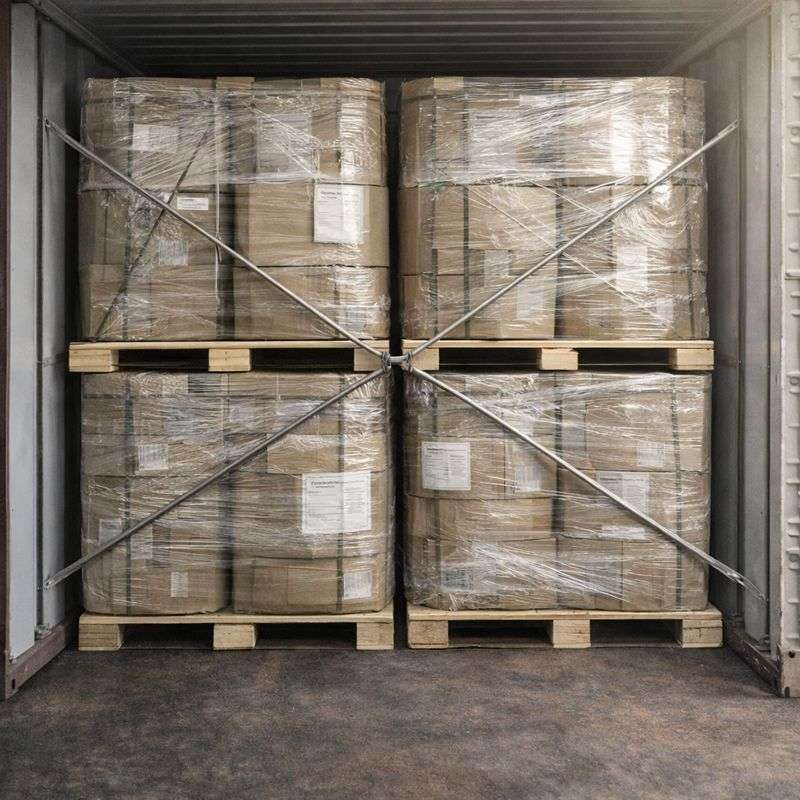
Commercial quantities are supplied in suitable moisture-protective bulk packaging according to the agreed product specification, order quantity, and shipping requirements.
Customization
Project-specific requirements may include 10-HDA target, particle size, concentration basis, packaging format, labeling, and supporting compliance documentation. Feasibility should be confirmed according to the required specification and order volume.
Logistics & Documents
Lifeworth supports international sample and bulk shipments together with batch COA, TDS, SDS, packing documents, and other available quality or compliance files required for supplier qualification and import review.
Supply, Documentation & Customization
Documents & Compliance
COA, SDS/MSDS, and TDS/spec sheet available based on product and market requirements.
Customization & Private Label
Custom packing, private label, and labeling support available depending on product type and order scope.
Commercial Support
Sample, lead time, and incoterm options can be discussed according to destination market and supply plan.
Why Source From Lifeworth
Defined Specification Clarity
We help buyers confirm the key commercial specification before quotation and sampling, including 10-HDA target, analytical basis, particle size, concentration requirements, packaging, and destination-market documentation.
Specification Matching Support
Different projects may require different 10-HDA levels, particle-size targets, or compliance documents. We coordinate suitable supply options according to the intended application and technical requirements rather than treating all Royal Jelly Powder as one standard grade.
Batch Documentation Support
Commercial batches can be supported with available COA, TDS, SDS, and related quality or compliance documents for supplier qualification, incoming inspection, and internal technical review.
Sample-to-Bulk Supply Coordination
Evaluation samples can be arranged before commercial purchasing, with follow-up support for specification confirmation, bulk packaging, labeling, export documentation, and international shipment coordination.

FAQ
What 10-HDA specifications are available for Royal Jelly Powder?
Freeze-dried Royal Jelly Powder is commercially available with different 10-HDA targets, with 4%, 5%, and 6% among the commonly offered specifications. Final availability should be confirmed according to the required product specification and order requirements.
How is 10-HDA tested in Royal Jelly Powder?
10-HDA is commonly evaluated by HPLC. When comparing suppliers, buyers should confirm that the quoted specification, evaluation sample, and commercial batch are assessed using the same agreed analytical basis.
What is the difference between fresh royal jelly and freeze-dried Royal Jelly Powder?
Fresh royal jelly contains naturally high moisture and normally requires tighter temperature control, while freeze-dried / lyophilized Royal Jelly Powder is supplied as a dry ingredient for easier handling, formulation, storage, and commercial transport. The two forms should not be compared only by weight without considering the manufacturing and concentration basis.
What does a 3:1 ratio mean for Royal Jelly Powder?
Some commercial projects describe Royal Jelly Powder using a fresh-material equivalent or concentration ratio such as 3:1. Because ratio definitions may depend on the manufacturing basis, buyers should confirm the ratio definition with the supplier rather than treating 3:1 as a universal grade standard.
Can you supply Royal Jelly Powder with an 80 mesh requirement?
Particle-size requirements such as 80 mesh can be reviewed according to the intended capsule, tablet, sachet, or powder-blend application. The required mesh specification should be confirmed before sampling or commercial production.
What documents and samples can Lifeworth provide?
Evaluation samples can be arranged for technical review and formulation testing. Available support may include COA, TDS, SDS, Halal documentation, Non-GMO statements, alcohol-free documentation, and other quality or compliance files according to the selected product specification.
Need more answers?
Explore our full FAQ library for documentation, compliance, shipping, and ordering guidelines.