
Beta Carotene Powder
Lifeworth supplies beta carotene powder for B2B buyers developing capsules, tablets, dry blends, premixes, and color-oriented nutrition products with clear specification and document requirements.
- 10%, 20%, 30%, 96%, or agreed assay options can be discussed
- Suitable for capsules, tablets, dry blends, premixes, and food colorant applications
- Powder, oil suspension, and CWS beadlet routes available for different formulation systems
- COA, SDS/MSDS, TDS, and specification documents available for sourcing review
- Sample and bulk supply supported according to assay, packaging, and destination requirements
Tell us your application, target specification, and destination market so we can support grade selection, documentation review, and packaging recommendations.

Quick Specs
Identity
INCI Name
CAS Number
Molecular Formula
Molecular Weight
Quality
Assay
Grade
Assay Method
Handling
Appearance
Form
Solubility
Applications
Commercial Terms
MOQ
MOQ depends on packaging and specification.
Lead Time
3–7 working days for standard items; bulk orders by schedule.
Incoterms
EXW / FOB / CIF / DAP / DDP
Sample
Free sample (shipping charged)
Quality & Documents
COA (per batch) • SDS/MSDS • TDS/Spec sheet (on request). Additional statements depend on product and market.
Product Overview
Beta Carotene Powder is a carotenoid ingredient commonly used as a provitamin A source, orange colorant, and functional nutrient in supplement and food-related formulations.
It is usually supplied as orange to red-orange powder with different assay options, and buyers often review potency, source route, solubility, stability, and document scope before technical or commercial evaluation.
It is commonly considered for capsules, tablets, dry premixes, and food colorant systems, with sample support and batch documents available for sourcing reference.

Applications
Dietary Supplements
Beta carotene powder is commonly used in capsule, tablet, and powder supplement projects where buyers need a carotenoid ingredient with defined assay and batch documentation. It is suitable for formulas positioned around provitamin A, carotenoids, antioxidant-oriented nutrition, or color-supported supplement blends.
Dry Premixes and Powder Blends
For dry premixes and powder blends, beta carotene powder can be selected when the formulation does not require direct water dispersion. Buyers should confirm assay strength, carrier system, flowability, blending uniformity, and color performance during pilot production.
Food Colorant Systems
Beta carotene powder may be used as an orange to yellow-orange colorant in suitable food systems. Since final color depends on dosage, matrix, particle dispersion, heat exposure, and processing conditions, small-batch testing is recommended before commercial production.
Nutritional Fortification
Beta carotene powder is also considered for nutrition-fortification projects where both nutrient positioning and color contribution are important. The suitable specification should be selected according to target dosage, final product form, regulatory market, and required documentation.
How to Choose the Right Grade / Form
For capsules and tablets
Choose standard beta carotene powder or high-assay powder when the project requires dry handling, defined potency, and compatibility with capsule or tablet production. The final choice should be based on target dosage, excipient system, and stability testing.
For dry premixes and sachets
Choose powder grades with suitable flowability and blending performance for premix, sachet, or dry blend applications. Uniform color distribution and assay consistency should be checked during pilot mixing.
For softgels and oil-based systems
Choose beta carotene oil instead of standard powder when the final product is a softgel, oil suspension, margarine, sauce, or other oil-based system. Oil suspension grades are easier to apply in lipid-based formulations.
For beverages and water-dispersible systems
Choose beta carotene CWS powder when the application requires water dispersion, instant drink use, dairy systems, or beverage premixes. Standard beta carotene powder is not the preferred choice for direct water-based systems.
Confirm assay basis
Beta carotene powder can be supplied in different assay levels such as 10%, 20%, 30%, 96%, or agreed specifications. Higher assay does not automatically mean better performance; the right assay depends on dosage, formulation system, stability, and cost target.
Confirm source route
Some buyers require natural beta carotene, while others focus mainly on potency, color performance, and cost efficiency. The natural or synthetic route should be confirmed before quotation, document review, and label-positioning discussion.
Confirm application system
Before selecting a specification, confirm whether the project is a dry supplement, food premix, oil-based product, or water-dispersible application. This avoids choosing standard powder for a system that actually requires oil suspension or CWS beadlet powder.
Technical & Formulation Notes
Technical Notes
Technical Notes
Beta carotene powder is mainly evaluated by assay strength, appearance, source route, solubility behavior, and stability under storage and processing conditions. Because beta carotene is sensitive to light, oxygen, and heat, buyers should review packaging, storage, and handling requirements together with the specification.
Manufacturing & Process
Manufacturing & Process
Beta carotene powder can be supplied through different production and formulation routes depending on the required grade, assay, and application system. For sourcing evaluation, buyers should confirm whether the project requires standard powder, high-assay powder, oil suspension, or CWS beadlet powder before comparing price or sample performance.
Compatibility / Formulation Notes
For capsules and tablets, beta carotene powder should be evaluated for assay, blending uniformity, color stability, and compatibility with excipients.
For dry blends and premixes, uniform distribution should be checked carefully because strong color contribution may make uneven mixing more visible.
For beverage or water-based systems, standard beta carotene powder is usually not the ideal route; beta carotene CWS powder should be reviewed instead.
For oil-based products, beta carotene oil suspension is generally more suitable than dry powder.
During storage and production, beta carotene should be protected from strong light, heat, oxygen, moisture, and prolonged open-air exposure.
Extended QC & Test Items
Extended QC & Test Items
Common review items include appearance, identification, assay, loss on drying, residue on ignition, heavy metals, microbiology, and batch documentation. Additional tests can be discussed according to destination market, application type, and buyer specification requirements.
Product specifications
| Test | Specification | Method |
|---|---|---|
| Appearance | Orange to red-orange powder | Visual |
| Identification | Conforms to agreed specification | Per specification |
| Assay | 10% / 20% / 30% / 96% or agreed specification | HPLC / Per specification |
| Loss on Drying | Per agreed specification | Per specification |
| Residue on Ignition | Per agreed specification | Per specification |
| Heavy Metals | Per agreed specification | Per specification |
| Lead | Per agreed specification | Per specification |
| Arsenic | Per agreed specification | Per specification |
| Cadmium | Per agreed specification | Per specification |
| Mercury | Per agreed specification | Per specification |
| Total Plate Count | Per agreed specification | Per specification |
| Yeast & Mold | Per agreed specification | Per specification |
| E. coli | Negative or per specification | Per specification |
| Salmonella | Negative or per specification | Per specification |
| Documents | COA, SDS/MSDS, TDS available | Reference |
Storage, Shelf Life & Packaging
Storage
Store beta carotene powder in a tightly sealed original container, protected from light, heat, oxygen, moisture, and strong odors.
After opening, the package should be resealed immediately and handled under clean, dry conditions to reduce oxidation and color degradation risk.
Shelf Life
Shelf life depends on assay, carrier system, packaging, and storage conditions.
Standard shelf life should be reviewed according to the agreed specification and batch COA.
Buyers should avoid prolonged exposure to air, direct sunlight, and high-temperature processing unless stability has been verified in the final formulation.
Packaging & Logistics
Sample Packing
Small samples can be arranged for formulation evaluation, document review, and preliminary color or assay testing. Sample availability depends on assay, stock status, and destination market.
Bulk Packing
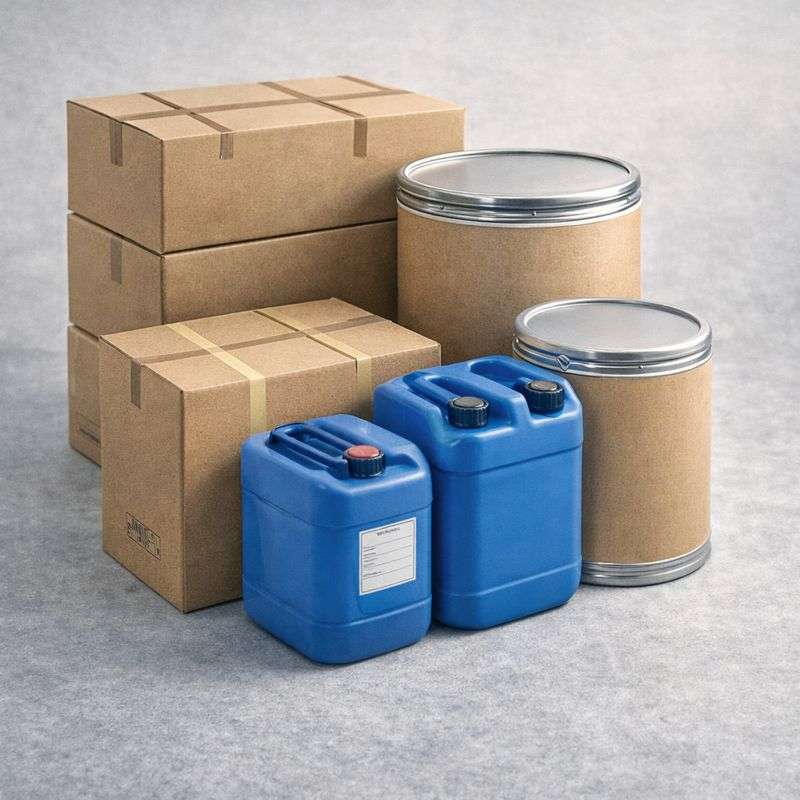
Bulk packing can be supplied in aluminum foil bags, cartons, fiber drums, or other suitable packaging according to order quantity and product form. Packaging should help reduce light, oxygen, and moisture exposure during storage and transport.
Customization
Different assay strengths, source routes, powder forms, and related beta carotene formats can be discussed according to formulation needs. For projects requiring oil-based or water-dispersible performance, beta carotene oil and beta carotene CWS powder can be reviewed separately.
Logistics & Documents
COA, SDS/MSDS, TDS, specification sheet, and other available documents can be provided for buyer review. Export documents and packing information can be arranged according to order terms, shipping route, and destination requirements.
Supply, Documentation & Customization
Documents & Compliance
COA, SDS/MSDS, and TDS/spec sheet available based on product and market requirements.
Customization & Private Label
Custom packing, private label, and labeling support available depending on product type and order scope.
Commercial Support
Sample, lead time, and incoterm options can be discussed according to destination market and supply plan.
Why Source From Lifeworth
Defined spec clarity
We support beta carotene powder supply based on assay strength, source route, form, and application requirements, helping buyers compare suitable specifications before purchase.
Customizable key target
Assay, packaging, document scope, and related formulation route can be discussed according to supplement, premix, food colorant, or nutrition-fortification project needs.
Batch documentation support
COA, SDS/MSDS, TDS, and specification documents are available to support supplier qualification, formulation review, and import preparation.
Export-ready bulk supply
Sample and bulk orders can be supported with practical packaging, logistics coordination, and document preparation for international B2B sourcing.

FAQ
1) What assay options of beta carotene powder can you supply?
We can discuss beta carotene powder in different assay options such as 10%, 20%, 30%, 96%, or other agreed specifications depending on project requirements and availability.
2) Is beta carotene powder natural or synthetic?
Both natural and synthetic routes may be discussed depending on sourcing requirements. Buyers should confirm whether the project specifically requires natural source documentation before quotation and sample review.
3) Is beta carotene powder suitable for beverages?
Standard beta carotene powder is oil-soluble and not the preferred choice for direct water-based beverage systems. For beverages, instant drinks, dairy systems, or water-dispersible premixes, beta carotene CWS powder is usually more suitable.
4) What is the difference between beta carotene powder and beta carotene oil?
Beta carotene powder is mainly used for capsules, tablets, dry blends, and premixes. Beta carotene oil is more suitable for softgels, oil suspensions, margarine, sauces, and other oil-based formulations.
5) Can you provide documents for technical review?
Yes. COA, SDS/MSDS, TDS, and specification documents are available. Additional documents may depend on product grade, source route, destination market, and buyer requirements.
6) How should beta carotene powder be stored?
It should be stored in a sealed container away from light, heat, oxygen, and moisture. The package should be resealed quickly after opening to help protect assay, color, and stability.
Need more answers?
Explore our full FAQ library for documentation, compliance, shipping, and ordering guidelines.