
Cellulose-Based Cosmetic Beads
Lifeworth supplies cellulose-based cosmetic beads for personal care projects requiring physical exfoliation, visible particles, plant-derived material direction or customized particle behavior.
Depending on the selected composition and structure, the beads may remain intact, gradually wear down, disperse or break during application. Particle size, color, appearance, hardness and breakdown behavior can be reviewed according to the target formulation and desired consumer experience.
- Cellulose-based options for exfoliating and visible-particle concepts
- Custom particle size, color, appearance and breakdown direction
- Suitable for cleansers, scrubs, shower products, soaps and personal care formulations
- Sample screening and technical review based on the actual formulation
Tell us your application, target specification, and destination market so we can support grade selection, documentation review, and packaging recommendations.
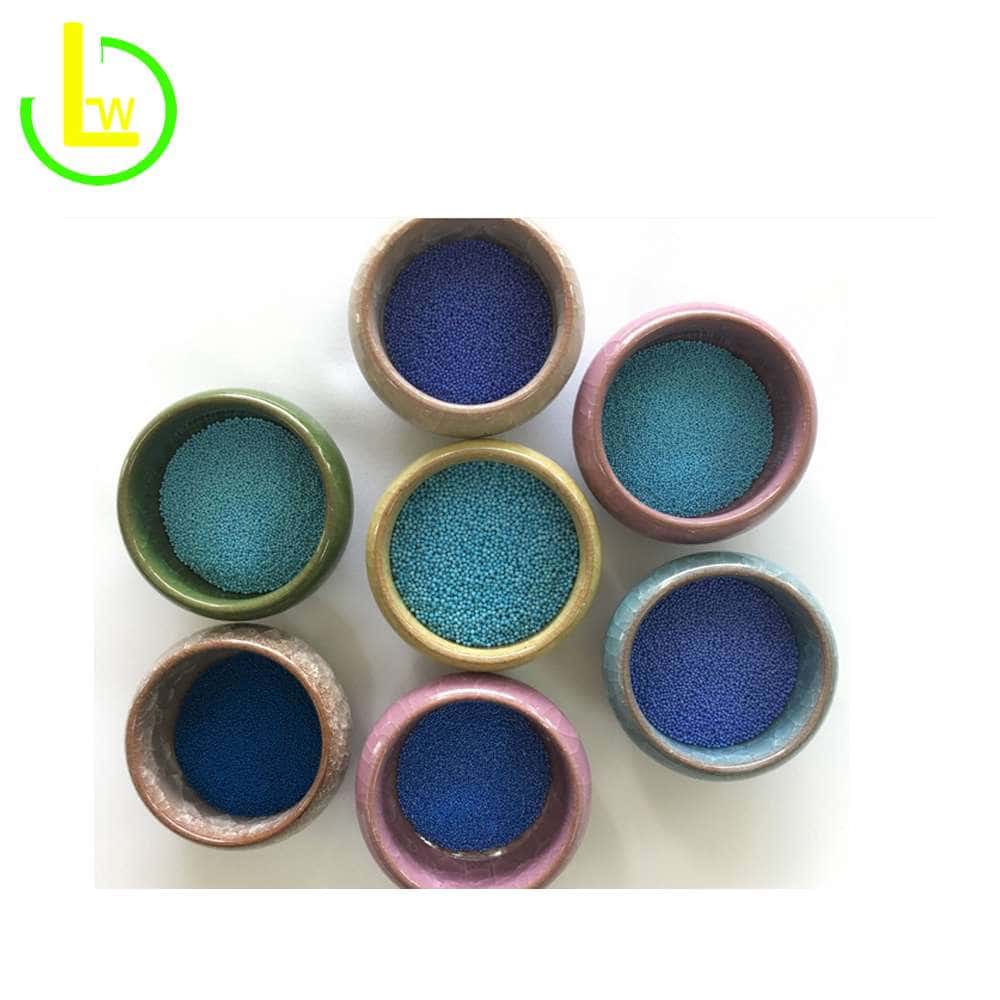
Quick Specs
Identity
INCI Name
Alias
Quality
Handling
Appearance
Form
Solubility
Applications
Commercial Terms
MOQ
MOQ depends on packaging and specification.
Lead Time
3–7 working days for standard items; bulk orders by schedule.
Incoterms
EXW / FOB / CIF / DAP / DDP
Sample
Free sample (shipping charged)
Quality & Documents
COA (per batch) • SDS/MSDS • TDS/Spec sheet (on request). Additional statements depend on product and market.
Product Overview
Cellulose-Based Cosmetic Beads are functional particles developed for personal care formulations requiring exfoliation, visible product differentiation or controlled particle breakdown. They may be selected for facial cleansers, scrubs, body wash, shower gels, soaps and other rinse-off or concept-driven applications.
This category does not represent one universal composition or performance standard. Different cellulose-based grades may use different carriers, coatings, binders, pigments or processing systems, which can affect hardness, appearance, density, suspension and behavior during application.
Some grades are intended mainly to provide physical exfoliation, while others may be selected for visible-particle effects, soft breakdown or customized carrier concepts. A bead may remain intact throughout use, gradually wear down during rubbing or disperse more readily depending on the material structure and formulation environment.
Biodegradable, plant-derived and non-plastic positioning may be possible for certain grades, but these claims should be assessed against the complete composition and supporting documentation of the specific product. The word “cellulose” alone does not confirm the environmental status of every coating, binder, pigment or additive in the finished bead system.
Final suitability should be confirmed in the customer’s actual formulation because appearance in the supplied particle form does not by itself confirm suspension stability, exfoliating feel, breakdown behavior or long-term compatibility.
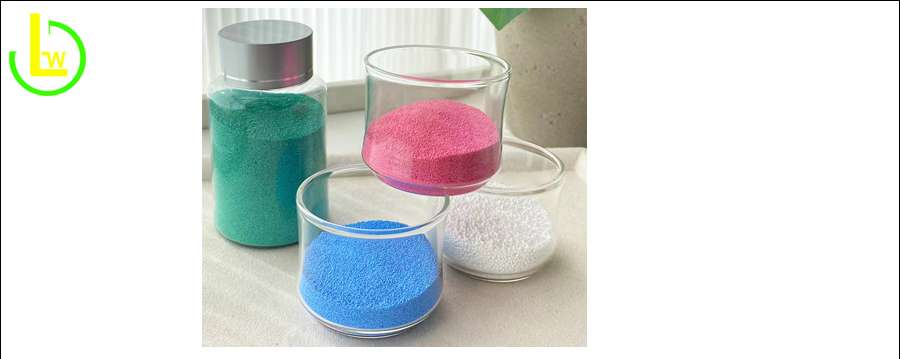
Applications
Facial Cleansers and Face Scrubs
Cellulose-based beads can be evaluated for facial products requiring visible particles and controlled physical exfoliation. Particle size, hardness, shape and breakdown behavior should be selected carefully to avoid an overly harsh scrub feel and to support the intended skin-care positioning.
Body Wash and Body Scrubs
Larger or more noticeable particles may be considered for body-care formulations where stronger exfoliation, visible texture or differentiated sensory performance is required. The selected grade should be tested for particle distribution, rinse-off behavior and compatibility with the surfactant system.
Cleansers and Shower Gels
Cellulose-based particles may provide visible product differentiation, light exfoliation or controlled breakdown in liquid cleansing systems. Suspension, density, color stability and resistance to premature softening should be evaluated in the actual base formulation.
Soaps and Syndet Bars
Selected solid particles may be incorporated into soaps and syndet bars for scrub effects and visual differentiation. Compatibility with processing temperature, mixing conditions, bar hardness and long-term particle integrity should be confirmed before scale-up.
Scalp and Hair-Care Products
Cellulose-based exfoliating particles may be evaluated for scalp scrubs, cleansing treatments and rinse-off hair-care concepts. Particle size, rinsability and compatibility with surfactants, conditioning agents and viscosity systems should be assessed in the complete formula.
Visible-Particle and Customized Carrier Concepts
Certain cellulose-based structures may be developed mainly for appearance, gradual breakdown or customized ingredient-carrying concepts rather than strong exfoliation. These projects require clear definition of the intended particle behavior, payload direction and consumer-use experience before sampling.
How to Choose the Right Grade / Form
Define the Primary Function
Confirm whether the particles are required mainly for exfoliation, visible decoration, controlled breakdown or another functional effect. A bead designed for scrub performance may not be suitable for a soft dispersible or carrier concept.
Select the Required Particle Behavior
Specify whether the particles should remain intact, gradually wear down, disperse during rubbing or break more completely during use. These outcomes depend on the material system, particle size, hardness and formulation environment.
Match the Grade to the Application Area
Facial formulations generally require a milder particle direction than body scrubs, soaps or scalp-care products. The intended body area and desired scrub intensity should therefore be confirmed before sample selection.
Review Particle Size and Hardness
Particle size influences visibility, suspension, skin feel and exfoliating intensity. Hardness and shape also affect whether the bead feels smooth, noticeable or abrasive during use.
Evaluate the Formulation Base
The finished-product pH, viscosity, surfactant system, emulsifiers, preservatives, processing temperature and mixing conditions may alter particle integrity and breakdown behavior. A grade suitable for a soap bar may not perform identically in a liquid cleanser or transparent gel.
Confirm Suspension and Visual Stability
Visible beads should be reviewed for settling, flotation, color contrast and batch-to-batch appearance in the actual formulation. Low-viscosity systems may require an appropriate suspension strategy.
Confirm Environmental Positioning
If biodegradable, plant-derived or non-plastic positioning is required, request the complete composition and supporting information for the exact grade. The claim should not be based on the product name alone.
Confirm Before Ordering
Please provide the finished-product type, intended application area, primary bead function, preferred particle size and color, desired breakdown behavior, formulation base, approximate pH, processing temperature, mixing conditions, sample quantity, estimated commercial demand and destination market.
Technical & Formulation Notes
Technical Notes
Technical review should focus on the relationship between particle composition, size, hardness, density and required behavior during use. A suitable grade should remain sufficiently stable during production, filling, storage and transportation while providing the intended exfoliating, visual or breakdown effect during application.
The required endpoint should be defined before sampling. Buyers should confirm whether the particle should remain visible after rubbing, gradually wear down, disperse completely or provide a controlled residual scrub feel.
Manufacturing & Process
Commercial production may involve preparation of a cellulose-based material system, particle formation, optional coating or coloring, drying, grading and visual inspection.
Final release criteria may include appearance, particle-size range, shape, hardness, moisture, density, dispersion behavior and application-specific performance. Exact processing details and composition depend on the selected grade.
Compatibility / Formulation Notes
- For facial cleansers: evaluate mildness, particle size, shape and rinsing behavior.
- For body wash and shower gel: review suspension, surfactant compatibility and particle integrity.
- For soaps and syndet bars: confirm resistance to processing temperature and mechanical stress.
- For transparent systems: assess color contrast, clarity impact, settling and particle distribution.
- For low-viscosity products: determine whether a suspending agent or viscosity adjustment is required.
- For processing: avoid excessive heat, high shear or prolonged aggressive mixing unless the grade has been validated under those conditions.
- For stability: conduct accelerated and real-time testing in the final formulation and packaging.
Extended QC & Test Items
- Particle appearance
- Color consistency
- Particle-size range
- Shape and visual uniformity
- Hardness or breakdown behavior
- Moisture, where applicable
- Bulk density, where applicable
- Dispersion and suspension behavior
- Formula compatibility
- Batch traceability linked to COA
Product specifications
| Test | Specification | Method |
|---|---|---|
| Appearance | White to off-white bead or particle form / per spec | Visual |
| Product Form | Bead / particle form | Visual / reference |
| Particle Size | As agreed specification | Sieve / internal method |
| Moisture | Meets agreed limits, if required | Typical / per spec |
| Dispersion / Presentation | Per agreed specification | Internal evaluation |
| Bulk Density | As agreed specification | Internal method |
| Documents | COA per batch; SDS/MSDS and TDS/spec sheet on request | Reference |
Storage, Shelf Life & Packaging
Storage
Store in a cool, dry and well-closed condition away from direct heat, strong light, moisture and excessive pressure. Keep the original package tightly sealed after opening and avoid unsuitable storage conditions that may alter particle appearance, hardness or handling behavior.
Handling
Avoid excessive heat, high shear, prolonged aggressive mixing and unnecessary compression unless the selected grade has been evaluated under those conditions. Particles should normally be added at a suitable stage of processing to reduce mechanical damage and maintain the intended appearance.
Shelf Life
Shelf life depends on the selected material system, moisture level, coating or coloring system and packaging format. Refer to the product label, COA, TDS or grade-specific specification for the declared shelf-life period of the supplied batch.
Packaging & Logistics
Sample Packaging
Sample quantity and packaging are arranged according to the selected grade and project requirements. Samples should be used to evaluate appearance, scrub feel, suspension, breakdown behavior and compatibility in the actual formulation.
Commercial Packaging
Commercial packaging may include protective foil bags, drums, cartons or another suitable configuration according to particle structure, order quantity and transportation requirements. The final packaging format should be confirmed after grade selection.
Logistics and Documentation
Transportation conditions should protect the particles from moisture, heat, compression and rough handling. Custom labels, shipping marks and export packing can be discussed according to destination and order quantity. COA, SDS/MSDS, TDS, composition information and supporting statements should be confirmed for the selected grade before shipment.

Supply, Documentation & Customization
Documents & Compliance
COA, SDS/MSDS, and TDS/spec sheet available based on product and market requirements.
Customization & Private Label
Custom packing, private label, and labeling support available depending on product type and order scope.
Commercial Support
Sample, lead time, and incoterm options can be discussed according to destination market and supply plan.
Why Source From Lifeworth
Function-Based Grade Selection
We help buyers distinguish cellulose-based exfoliating particles from decorative, dispersible or customized carrier systems. Product selection is based on the required function and behavior rather than the commercial name alone.
Particle Size and Sensory Matching
Particle size, shape, hardness and breakdown direction can be reviewed according to the intended body area, scrub intensity and finished-product experience. Standard samples can be screened before customized development is considered.
Formulation-Focused Evaluation
Selection considers the finished-product type, pH, viscosity, surfactant system, processing temperature, suspension requirement and expected behavior during rubbing and rinsing.
Environmental Claim Review
Biodegradable, plant-derived and non-plastic positioning is reviewed according to the complete material system and available supporting information. We avoid treating all cellulose-based products as technically or environmentally identical.
Grade-Specific Documentation
Different cellulose bead grades may use different binders, coatings, pigments and processing systems. COA, SDS/MSDS, TDS, composition information and supporting statements are therefore reviewed for the selected product.
Sample and Export Coordination
Samples can be arranged for evaluation of particle appearance, scrub feel, suspension and breakdown behavior in the customer’s formulation. MOQ, lead time, packaging, labeling and international shipping support are confirmed after grade selection.

FAQ
What are cellulose-based cosmetic beads?
Cellulose-based cosmetic beads are particles developed from a cellulose-containing material system for use in personal care formulations. Depending on the grade, they may provide exfoliation, visible particle effects, controlled breakdown or customized carrier functions.
Are all cellulose beads biodegradable?
Not automatically. The environmental profile depends on the complete composition, including any binders, coatings, pigments and additives. Biodegradability and non-plastic positioning should be confirmed for the specific grade.
Are cellulose beads suitable for facial scrubs?
Selected grades may be suitable for facial scrubs when particle size, shape, hardness and exfoliating intensity are appropriate for facial use. Final suitability should be confirmed through testing in the actual formulation.
Can cellulose beads be used in body wash and shower gel?
Yes, selected cellulose-based particles may be evaluated for body wash and shower gel. Suspension, surfactant compatibility, particle integrity and rinsing behavior should be tested in the finished formula.
Do cellulose beads dissolve during use?
Not necessarily. Depending on the grade, they may remain intact, gradually wear down, disperse or break during rubbing. The required behavior should be defined before sample selection.
Can particle size and color be customized?
Project-based customization may include particle size, color, appearance, hardness, shape and breakdown direction. Feasibility, MOQ and development time depend on the selected material system and degree of customization.
Do cellulose beads require a suspending agent?
Possibly. Suspension depends on particle size, density and the viscosity and yield value of the formulation. Low-viscosity products may require formulation adjustment to prevent settling or flotation.
Can cellulose beads be used in soaps and syndet bars?
Selected solid particle grades may be suitable for soaps and syndet bars. Resistance to processing temperature, mixing stress and long-term storage should be evaluated before commercial production.
What information is needed before recommending a sample?
Please provide the finished-product type, intended application area, desired particle function, preferred size and color, required breakdown behavior, formulation base, approximate pH, processing temperature, mixing conditions and estimated sample and commercial quantities.
What technical documents are available?
COA, SDS/MSDS, TDS or specification information, composition data and relevant supporting statements may be available according to the selected grade. The exact document package should be confirmed during product qualification.
Need more answers?
Explore our full FAQ library for documentation, compliance, shipping, and ordering guidelines.