
Sumac Wax (Japan Wax)
Lifeworth supplies Sumac Wax, also known as Japan Wax, with grade selection based on acid value, iodine value, melting behavior, saponification value, fatty acid profile and intended application.
- AAA / AA / A grade options
- 45–53°C melting range
- Acid value and iodine value grade differentiation
- Suppository, ointment, cosmetic and specialty application review
- COA, SDS, TDS, sample and bulk supply support
Tell us your application, target specification, and destination market so we can support grade selection, documentation review, and packaging recommendations.

Quick Specs
Identity
INCI Name
Alias
Molecular Weight
Quality
Assay
Grade
Handling
Appearance
Form
Solubility
Applications
Commercial Terms
MOQ
MOQ depends on packaging and specification.
Lead Time
3–7 working days for standard items; bulk orders by schedule.
Incoterms
EXW / FOB / CIF / DAP / DDP
Sample
Free sample (shipping charged)
Quality & Documents
COA (per batch) • SDS/MSDS • TDS/Spec sheet (on request). Additional statements depend on product and market.
Product Overview
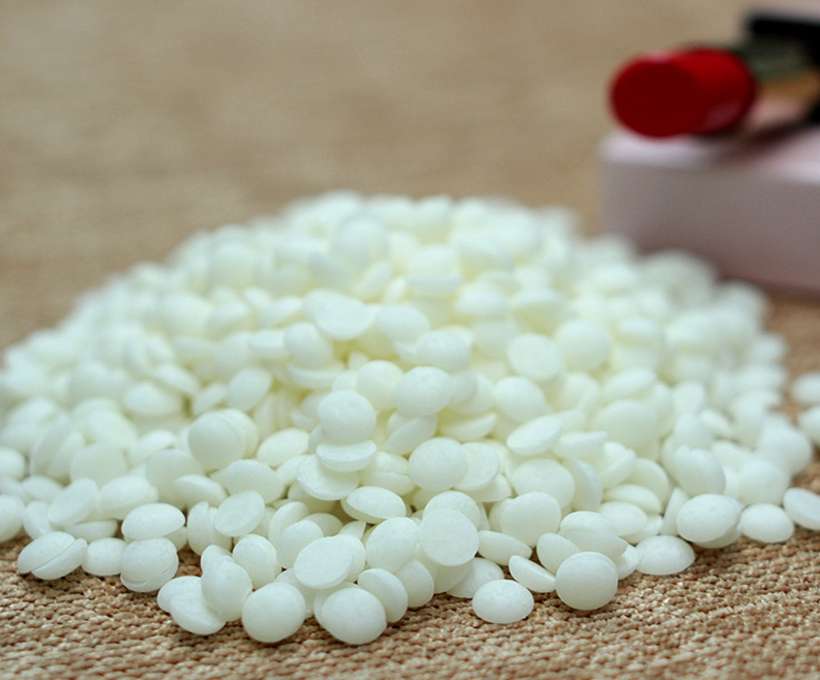
Sumac Wax, also known as Japan Wax or Japanese Wax, is a plant-derived wax material commercially selected according to grade, acid value, iodine value, melting behavior and saponification characteristics.
Buyers should compare AAA, AA and A grades against the complete specification and intended application rather than treating the grade name alone as proof of pharmaceutical or cosmetic suitability.
It can be evaluated for selected excipient systems, suppository and ointment bases, cosmetic formulations and specialty wax applications, with samples, technical documents and commercial bulk supply available.
Applications
Sumac Wax is mainly selected where a flexible wax phase, moderate melting range and controllable acid and iodine values are relevant to formulation design.
Pharmaceutical & Excipient Applications
Sumac Wax can be evaluated in selected pharmaceutical or excipient systems where wax consistency, melting behavior, fatty-acid-related properties and compatibility with other excipients are important. Final suitability should be confirmed against the applicable product specification and compliance requirements.
Suppository Base Systems
Sumac Wax may be considered in selected suppository-base formulations where melting behavior, consistency and compatibility with oils, fats or other waxes need to be adjusted. The appropriate grade should be selected through formulation evaluation rather than grade name alone.
Ointment & Semi-Solid Bases
Can be evaluated in selected ointment and semi-solid systems where the wax is used to modify structure, consistency, spreadability or melting behavior. Compatibility with the full oil, fat and active-ingredient system should be tested during development.
Cosmetics & Personal Care
Sumac Wax can be considered in selected creams, balms, sticks and other wax-containing formulations where flexibility, texture and emollient-system compatibility are important.
Polish & Specialty Wax Formulations
Can also be evaluated in polish, coating and specialty wax-blend systems where gloss, flexibility, film behavior and blending performance are relevant.
How to Choose the Right Grade / Form
The suitable grade should be selected according to acid value, iodine value, formulation requirements and required quality control rather than by the AAA / AA / A designation alone.
AAA Grade
AAA Grade is characterized by comparatively tighter acid-value and iodine-value limits. It can be considered where the formulation or purchasing specification requires more tightly controlled wax quality. Typical selection should still include melting point, saponification value, appearance and application-specific compliance review.
AA Grade
AA Grade provides an intermediate acid-value and iodine-value range. It can be considered for formulations requiring a balanced commercial specification where the complete wax profile meets the project requirements.
A Grade
A Grade allows a broader acid-value and iodine-value range. It may suit selected specialty, industrial or formulation applications where broader specification limits are acceptable.
Important Grade Principle
AAA, AA and A are commercial grade designations. Grade designation alone should not be treated as evidence of pharmaceutical suitability. For pharmaceutical, suppository or ointment applications, the complete specification, test scope and compliance requirements should be reviewed before product approval.
How to Choose the Right Specification
For Sumac Wax, grade selection should be supported by the actual physical and chemical specification.
Confirm Acid Value
Acid value is one of the main parameters differentiating commercial grades and should be checked against the formulation and quality requirements.
Confirm Iodine Value
Iodine value reflects the degree of unsaturation in the wax-related lipid profile and is another key grade-differentiation parameter.
Confirm Melting Point
The melting range is important for suppository, ointment, cosmetic and specialty wax formulations because it influences processing and final-product consistency.
Confirm Saponification Value
Saponification value provides additional information on the glyceride and fatty-acid characteristics of the material and should be reviewed where relevant to formulation behavior.
Confirm Water & Impurities
Moisture and impurity limits should be included in commercial qualification and batch QC.
Confirm Fatty Acid Profile
Where formulation performance is sensitive to lipid composition, review the palmitic, oleic, linoleic, stearic and other fatty-acid components.
Confirm Intended Excipient Use
Specify whether the material is being evaluated for suppository, ointment, coating, cosmetic base or another application.
Confirm Compliance Requirements
If the project requires pharmaceutical-excipient compliance, confirm the required specification, analytical scope and destination-market documentation before approval.
Technical & Formulation Notes
Technical Notes
Sumac Wax is not selected only by melting point.
Its commercial behavior is influenced by acid value, iodine value, saponification value, fatty acid composition and the overall glyceride profile of the material.
Compared with harder plant waxes, Sumac Wax is commonly considered where a softer and more flexible wax phase is required in the formulation.
Manufacturing & Process
Sumac Wax is obtained from sumac-derived plant material through extraction and refining processes appropriate to the selected commercial grade.
Refining can influence color, impurity level, acid value, iodine value and other quality characteristics.
For repeat sourcing, the selected grade and agreed analytical specification should remain consistent between the approved sample and later commercial batches.
Compatibility / Formulation Notes
Sumac Wax should be evaluated in the complete formulation system because its performance depends on both grade and interaction with other lipid components.
For Suppository Systems
Evaluate melting behavior, hardness, deformation resistance, active-ingredient compatibility and interaction with other fats or waxes during formulation trials.
For Ointment & Semi-Solid Systems
Review consistency, spreadability, oil-binding behavior and compatibility with mineral oils, plant oils, fatty acids, esters and other waxes.
For Cosmetic Formulations
Evaluate texture, drag, structure, flexibility and sensory feel within the complete balm, cream or stick system.
For Wax Blends
Sumac Wax can be blended with harder or softer wax materials to modify flexibility, gloss, melting behavior and final structure.
For Repeat Production
Once a grade is approved, acid value, iodine value, melting point, saponification value, appearance and other key QC parameters should remain consistent across later batches.
Extended QC & Test Items
Technical evaluation may include appearance, melting point, acid value, iodine value, saponification value, water content and impurities.
Where relevant, buyers may also review fatty acid composition, heavy metals, microbiological parameters, residual processing-related components and other application-specific quality requirements.
For pharmaceutical or excipient-related use, suitability should be confirmed against the required specification, test scope and destination-market documentation.
Product specifications
| Test | Specification | Method |
|---|---|---|
| Appearance | Light-colored to yellowish wax, subject to grade | Visual |
| Melting Point | 45-53 C | Per specification |
| Acid Value - AAA | <=20 | Per specification |
| Acid Value - AA | 20-30 | Per specification |
| Acid Value - A | 30-50 | Per specification |
| Iodine Value - AAA | <=20 | Per specification |
| Iodine Value - AA | 20-25 | Per specification |
| Iodine Value - A | 25-30 | Per specification |
| Saponification Value | 170-240 | Per specification |
| Water | <=0.30% | Per specification |
| Impurities | <=0.20% | Per specification |
| Fatty Acid Profile | According to selected specification | Per specification |
| Additional QC | Per agreed application requirement | Per specification |
Storage, Shelf Life & Packaging
Storage
Store Sumac Wax in the original sealed packaging in a cool, dry and well-ventilated place.
Protect from excessive heat, direct sunlight, moisture and contamination during storage and handling.
Avoid prolonged exposure to elevated temperature that may alter physical form or appearance.
Shelf Life
Shelf life should follow the confirmed product specification, batch label and shipment documentation.
Packaging & Logistics
Sumac Wax can be supplied for formulation evaluation, supplier qualification and commercial bulk purchasing.
Sample Packing
50 g evaluation samples can be arranged for formulation and quality review.
Commercial Packing
Standard bulk packing is 20 kg/bag, subject to confirmed order and logistics requirements.
Grade Selection
AAA, AA and A grades can be reviewed according to the required acid value, iodine value and application.
Specification Review
Melting point, acid value, iodine value, saponification value, water, impurities, fatty acid profile and selected additional QC requirements can be reviewed according to actual supply capability.
Documents
COA, SDS, TDS and relevant technical documents can be provided according to the selected grade and project requirements.

Supply, Documentation & Customization
Documents & Compliance
COA, SDS/MSDS, and TDS/spec sheet available based on product and market requirements.
Customization & Private Label
Custom packing, private label, and labeling support available depending on product type and order scope.
Commercial Support
Sample, lead time, and incoterm options can be discussed according to destination market and supply plan.
Why Source From Lifeworth
Lifeworth supports Sumac Wax sourcing from initial grade comparison through sample qualification and commercial supply.
AAA / AA / A Grade Selection
Different grade options can be compared according to acid value, iodine value and application requirements.
Excipient Application Review
Suppository, ointment, cosmetic and specialty wax applications can be evaluated against the actual grade and specification.
Wax Chemistry Review
Melting point, saponification value, moisture, impurities and fatty acid profile can be reviewed together rather than relying on one headline parameter.
Compliance-Focused Qualification
For pharmaceutical-related projects, specification and document requirements can be reviewed before commercial approval.
Sample-to-Bulk Supply
Evaluation samples and commercial quantities can be coordinated around the approved grade and specification.

FAQ
What is Sumac Wax?
Sumac Wax is a plant-derived wax material also commonly known as Japan Wax or Japanese Wax. It is commercially selected according to parameters such as melting point, acid value, iodine value and saponification value.
Is Sumac Wax the same as Japan Wax?
Sumac Wax and Japan Wax are commonly used commercial names for this type of plant-derived wax material. Exact botanical source and product specification should still be confirmed with the supplier.
What is the difference between AAA, AA and A Sumac Wax?
The grades are mainly differentiated by acid-value and iodine-value ranges. AAA has tighter limits, AA has intermediate limits and A allows a broader range, but grade suitability should always be evaluated against the complete specification and intended application.
Can Sumac Wax be used for suppositories?
Sumac Wax can be evaluated in selected suppository-base formulations where its melting behavior, consistency and compatibility with other fats or waxes are suitable. Pharmaceutical suitability should be confirmed against the required specification and compliance documentation.
Can Sumac Wax be used as an ointment base?
It can be evaluated in selected ointment and semi-solid formulations to modify structure, consistency and melting behavior. Compatibility with the full formulation should be confirmed through development testing.
Is AAA Sumac Wax automatically pharmaceutical grade?
No. AAA is a commercial grade designation based on tighter analytical limits and should not automatically be interpreted as pharmaceutical grade. Pharmaceutical use requires review of the complete specification, analytical scope and applicable compliance requirements.
What should I compare when sourcing bulk Sumac Wax?
Compare grade, acid value, iodine value, melting point, saponification value, moisture, impurities, fatty acid profile, intended application, documentation and packaging before commercial approval.
Need more answers?
Explore our full FAQ library for documentation, compliance, shipping, and ordering guidelines.