
Granulated Erythritol / Erythritol Powder
Lifeworth supplies granulated erythritol and erythritol powder for manufacturers developing low-calorie and reduced-sugar products. Particle size, purity, appearance, solubility, and application suitability can be reviewed before sample testing or bulk order confirmation.
- Food grade erythritol available as granules, crystalline powder, or agreed particle size
- Suitable for reduced-sugar foods, beverages, baking mixes, tabletop sweeteners, and nutrition products
- Specification review includes purity, appearance, particle size, moisture, heavy metals, and microbiological limits
- COA, SDS/MSDS, TDS/spec sheet, sample support, and export documents available
Tell us your application, target specification, and destination market so we can support grade selection, documentation review, and packaging recommendations.

Quick Specs
Identity
INCI Name
Alias
CAS Number
Molecular Formula
Molecular Weight
Quality
Assay
Grade
Standards
Assay Method
Handling
Appearance
Form
Solubility
Applications
Commercial Terms
MOQ
MOQ depends on packaging and specification.
Lead Time
3–7 working days for standard items; bulk orders by schedule.
Incoterms
EXW / FOB / CIF / DAP / DDP
Sample
Free sample (shipping charged)
Quality & Documents
COA (per batch) • SDS/MSDS • TDS/Spec sheet (on request). Additional statements depend on product and market.
Product Overview
Granulated Erythritol is a food grade polyol sweetener commonly used in reduced-sugar food, beverage, baking, tabletop sweetener, and nutrition product development.
It is usually supplied as white crystalline granules or powder, and buyers often review purity, particle size, appearance, moisture, solubility, and microbiological limits before technical or commercial evaluation.
It is commonly considered for low-calorie foods, sugar-free beverages, baking mixes, chewing products, sweetener blends, and supplement formulations, with sample evaluation and batch documentation available for sourcing reference.

Applications
Food & Beverage
Granulated erythritol is used in reduced-sugar beverages, flavored drinks, dairy alternatives, jams, sauces, snacks, candies, and functional food systems. It can provide sweetness and body while helping formulators reduce sugar content in finished products.
Baking & Tabletop Sweeteners
Erythritol is commonly considered for baking mixes, tabletop sweeteners, sugar replacement blends, sachets, and home-use sweetener formats. Particle size, sweetness balance, cooling effect, and blending compatibility should be reviewed during formulation testing.
Dietary Supplements
It can be used in chewable tablets, effervescent tablets, gummies, sachets, powder drinks, and nutrition powders where sweetness, mouthfeel, and low-calorie positioning are needed. Buyers should review dosage, solubility, flavor masking, and compatibility with minerals, vitamins, acids, or active ingredients.
Sweetener Blends
Erythritol is often blended with stevia, monk fruit extract, allulose, inulin, fiber powders, or other sweetening systems. In blends, erythritol can provide bulk and mouthfeel while high-intensity sweeteners adjust sweetness strength.
How to Choose the Right Grade / Form
For general food and beverage use
Standard food grade granulated erythritol is suitable for many food, beverage, and sweetener applications where a crystalline bulk sweetener is required. Buyers should review purity, solubility, particle size, and microbiological limits according to the finished product format.
For powder blends and sachets
Powdered erythritol or finer particle size options may be preferred for sachets, premixes, instant drink powders, and nutrition blends. A finer grade can support more uniform blending and faster dispersion, but flowability should still be tested.
For baking and tabletop sweeteners
Granulated or crystalline erythritol is often used when a sugar-like texture and visual appearance are preferred. For tabletop sweetener systems, particle size, sweetness balance, cooling effect, and compatibility with high-intensity sweeteners should be reviewed.
For custom sweetener systems
If the project requires a specific sweetness target, mouthfeel, or blending behavior, erythritol can be evaluated together with stevia, monk fruit extract, allulose, inulin, or other sweetener ingredients. In this case, a custom erythritol blend may be more suitable than a single ingredient.
Specification selection notes
Review particle size and physical form, purity and food grade requirements, and application compatibility before confirming the final specification.
Technical & Formulation Notes
Technical Notes
Erythritol is a bulk sweetener and polyol ingredient used when formulators need sweetness contribution, sugar-like crystalline structure, low-calorie positioning, and good processing compatibility.
Unlike high-intensity sweeteners such as stevia or monk fruit extract, erythritol can provide body, bulk, and mouthfeel in many reduced-sugar systems.
For procurement evaluation, buyers should review purity, particle size, mesh range, appearance, solubility, moisture, bulk density, and microbiological limits. Particle size is especially important for powder blends, tabletop sweeteners, baking mixes, and products where mouthfeel or dissolution speed affects the final user experience.
Manufacturing & Process
Commercial erythritol is commonly produced through fermentation and subsequent purification, crystallization, drying, sieving, and packing steps.
The final commercial form may be supplied as granulated erythritol, crystalline erythritol, powdered erythritol, or custom particle size according to customer application needs.
Production and quality control focus on purity, appearance, moisture, particle size distribution, heavy metals, microbiological limits, and compliance with agreed food grade specifications. Batch documents can be provided for customer review before commercial order confirmation.
Compatibility / Formulation Notes
- For powder blends and sachets, review particle size, flowability, dosage uniformity, dusting, and compatibility with flavors or high-intensity sweeteners.
- For beverages and instant drinks, test dissolution speed, sweetness release, cooling effect, acidity compatibility, and final flavor balance.
- For baking applications, evaluate sweetness level, browning behavior, texture, crystallization, and performance with other bulking agents.
- For tablets, gummies, and nutrition products, review mouthfeel, compression behavior, hygroscopicity, and compatibility with minerals, vitamins, acids, or active ingredients.
- For sweetener blends, erythritol can be combined with stevia, monk fruit extract, allulose, inulin, or fiber ingredients to adjust sweetness, body, and aftertaste.
Extended QC & Test Items
Common QC items include appearance, identification, assay or purity, particle size, loss on drying, residue on ignition, reducing sugars, heavy metals, microbiological limits, and batch documentation.
Additional test items can be discussed according to customer application, destination market, and import requirements.
Product specifications
| Test | Specification | Method |
|---|---|---|
| Appearance | White crystalline granules or powder | Visual |
| Identification | Conforms to agreed specification | Per specification |
| Assay / Purity | Per agreed specification | Per specification |
| Particle Size | Per agreed specification | Sieve / Per specification |
| Loss on Drying | Per agreed specification | Per specification |
| Residue on Ignition | Per agreed specification | Per specification |
| Heavy Metals | Per agreed specification | Per specification |
| Microbiological Limits | Per agreed specification | Per specification |
| Documents | COA per batch; SDS/MSDS and TDS available | Reference |
Storage, Shelf Life & Packaging
Storage
Store granulated erythritol in a cool, dry, clean, and well-ventilated area.
Keep the packaging tightly sealed after opening and protect the product from moisture, direct sunlight, heat, and strong odors.
Shelf Life
Shelf life should be confirmed according to the agreed specification, packaging format, and storage condition.
For sourcing and quality review, please refer to the product label, COA, and batch-specific storage recommendation.
Packaging & Logistics
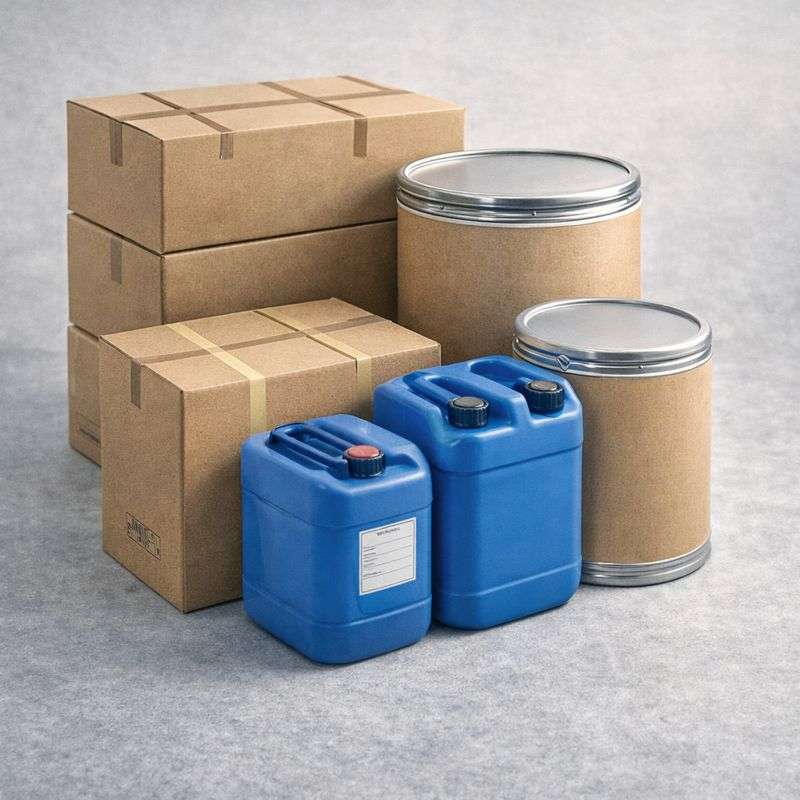
Standard Packing: Inner double PE bags + outer fiber drum / carton (or aluminum foil bag).
Sample package:10g / 20g /50g / 100g Net Weight Options: 1 kg / 5 kg / 10 kg / 25 kg (customizable).
Palletizing: Export-grade palletized shipment with stretch film and corner protection.
Shipping Methods: Air freight / Sea freight / Express (DHL/UPS/FedEx). Lead Time: Typically 3–7 working days (subject to stock and QC release).
Labeling: Product name, batch/lot No., manufacturing date, expiry date, storage conditions.
Supply, Documentation & Customization
Documents & Compliance
COA, SDS/MSDS, and TDS/spec sheet available based on product and market requirements.
Customization & Private Label
Custom packing, private label, and labeling support available depending on product type and order scope.
Commercial Support
Sample, lead time, and incoterm options can be discussed according to destination market and supply plan.
Why Source From Lifeworth

FAQ
What is granulated erythritol?
Granulated erythritol is a crystalline food grade polyol sweetener commonly used in reduced-sugar food, beverage, baking, tabletop sweetener, and nutrition formulations.
Is granulated erythritol the same as erythritol powder?
They are the same ingredient but may differ in particle size and physical form. Granulated erythritol is more sugar-like, while powdered erythritol is usually finer and more suitable for dry blends, sachets, and faster dispersion systems.
What specifications should buyers review?
Buyers usually review purity, appearance, particle size, moisture, solubility, heavy metals, microbiological limits, packaging format, and batch documents before confirming an erythritol specification.
Can erythritol be used in sweetener blends?
Yes. Erythritol is commonly blended with stevia, monk fruit extract, allulose, inulin, fiber powders, or other sweetening systems to adjust sweetness, body, mouthfeel, and aftertaste.
Can you provide samples and documents?
Yes. Samples can be arranged for formulation testing, and common documents include COA, SDS/MSDS, and TDS/spec sheet. Additional documents can be discussed according to market and order requirements.
How should erythritol be stored?
Store it in sealed packaging in a cool, dry, and clean place. Keep it away from moisture, heat, direct sunlight, and strong odors after opening.
Need more answers?
Explore our full FAQ library for documentation, compliance, shipping, and ordering guidelines.