
Ivermectin Powder (CAS 70288-86-7)
For buyers evaluating ivermectin API, key purchasing considerations include the applicable assay basis, H2B1a and H2B1b composition, related-substance limits, residual solvents, pharmacopoeial reference and available batch documentation.
• Veterinary API supply against an agreed specification
• H2B1a and total H2B1a + H2B1b reported according to the applicable test method
• Batch COA with SDS/MSDS and specification support
• Pharmacopoeial or manufacturer-standard options confirmed by project
• Evaluation samples and export packaging available for qualified commercial projects
Tell us your application, target specification, and destination market so we can support grade selection, documentation review, and packaging recommendations.

Quick Specs
Identity
Alias
CAS Number
Molecular Formula
Molecular Weight
Quality
Assay
Grade
Standards
Assay Method
Handling
Appearance
Form
Solubility
Applications
Commercial Terms
MOQ
MOQ depends on packaging and specification.
Lead Time
3–7 working days for standard items; bulk orders by schedule.
Incoterms
EXW / FOB / CIF / DAP / DDP
Sample
Free sample (shipping charged)
Quality & Documents
COA (per batch) • SDS/MSDS • TDS/Spec sheet (on request). Additional statements depend on product and market.
Product Overview
Ivermectin Powder (CAS 70288-86-7) is supplied as an active pharmaceutical ingredient for veterinary pharmaceutical and animal-health formulation projects.
Commercial ivermectin API is generally evaluated according to its H2B1a content, combined H2B1a and H2B1b assay, related-substance profile, residual solvents, moisture or loss on drying, applicable analytical method and pharmacopoeial or manufacturer specification.
Because assay expressions and release requirements may differ between product sources and registered specifications, buyers should compare materials using the same test basis rather than relying only on a headline purity percentage.
Lifeworth supports qualified buyers with specification review, batch COA, SDS/MSDS, TDS or specification documents, evaluation samples and bulk export arrangements. Availability of GMP, registration, legalized or market-specific documents depends on the selected manufacturer and destination market.
Applications
Veterinary Oral Formulations
Ivermectin API may be evaluated for veterinary oral dosage forms such as tablets, boluses, oral solutions and suspensions. Material selection should be based on the required assay specification, impurity profile, particle characteristics and finished-product manufacturing process.
Veterinary Topical Formulations
It may also be considered for veterinary topical and pour-on formulations. Solvent compatibility, dispersion behaviour, crystallization control, formulation stability and packaging compatibility should be evaluated during product development.
Veterinary Parenteral Formulations
Ivermectin may be evaluated for veterinary parenteral projects where the selected API source, specification and supporting documentation meet the finished-product manufacturer’s requirements. Injectable suitability should not be assumed from assay alone and requires dosage-form-specific qualification.
Veterinary Medicated Premix Formulations
Ivermectin may be considered as an active ingredient for regulated veterinary medicated-premix or medicated-feed products where legally permitted. It is not a conventional nutritional feed additive. Permitted use, formulation, dosage, registration and market compliance must be confirmed by the finished-product manufacturer.
How to Choose the Right Grade / Form
Confirm the Applicable Specification
Determine whether the project requires USP, EP, BP, a registered manufacturer specification or another customer-approved standard. A pharmacopoeial reference should not be assumed until the selected product source has been confirmed.
Compare Assay on the Same Basis
Review whether assay is reported on an as-is, anhydrous or dried basis. Confirm the required H2B1a content, combined H2B1a and H2B1b content and any limit applied to the H2B1b component.
Review the Impurity Profile
Assay alone is not sufficient for API qualification. Buyers should also compare specified and unspecified related substances, total impurities, residual solvents, moisture or loss on drying and other release tests relevant to the registered formulation.
Match the Material to the Dosage Form
Oral, premix, topical and injectable veterinary formulations may have different requirements for particle size, solubility behaviour, microbiological quality and additional technical controls. Share the intended dosage form before sample selection.
Confirm Regulatory Documents Before Ordering
GMP evidence, manufacturer qualification documents, stability data, registration support, legalized documents, DMF-related support or other market-specific files may not be available from every source. Required documents should be listed and confirmed before commercial quotation.
Technical & Formulation Notes
Technical Notes
Ivermectin is a mixture composed mainly of H2B1a together with a smaller proportion of H2B1b. Commercial specifications may separately control H2B1a, total H2B1a and H2B1b, related substances, residual solvents, moisture and other release parameters. When comparing different sources, buyers should confirm that the assay results are reported using the same analytical method and the same basis, such as as-is, anhydrous or dried basis.
Manufacturing & Process
Commercial ivermectin API is generally produced from fermentation-derived avermectin intermediates followed by controlled chemical conversion, purification, crystallization and drying. The actual manufacturing route, solvent system, purification controls and release specification depend on the selected manufacturer. Manufacturing-process documents and related technical information should therefore be confirmed according to the qualified product source.
Compatibility / Formulation Notes
Specification Selection
Before selecting a sample or commercial batch, confirm the required pharmacopoeial or manufacturer specification, assay basis, H2B1a content, combined H2B1a and H2B1b content, related-substance limits and any project-specific quality requirements.
Solubility and Formulation Behaviour
Ivermectin is practically insoluble in water. Formulation development may therefore require appropriate solvent, carrier, dispersion or solubilization systems according to the intended dosage form. Compatibility and crystallization behaviour should be assessed under actual processing and storage conditions.
Particle Characteristics
Particle size can affect dispersion, dissolution behaviour, blending uniformity and process consistency. This is particularly important in low-dose oral, suspension and premix systems. Where particle size is critical, the required range and test method should be agreed before ordering.
Dosage-Form Qualification
Oral, topical, premix and parenteral products may require different controls for impurities, residual solvents, particle size, microbiological quality and additional testing. The intended dosage form should be disclosed before confirming API suitability.
Stability and Compatibility
The finished-product manufacturer should evaluate compatibility with solvents, carriers, surfactants, excipients and packaging materials. Light, temperature, moisture, crystallization and content-uniformity risks should also be considered during formulation and stability studies.
Regulatory Responsibility
Raw-material information is provided for preliminary sourcing and formulation evaluation. Final dosage, processing conditions, finished-product safety, stability, registration and destination-market compliance remain the responsibility of the finished-product manufacturer.
Extended QC & Test Items
API qualification should not be based only on a headline assay value. Buyers should also review the H2B1a content, combined H2B1a and H2B1b assay, individual and total related substances, residual solvents, water or loss on drying, residue on ignition or sulfated ash, and any additional tests required by the applicable pharmacopoeia, registered specification or destination market.
Where particle size, microbiological limits, elemental impurities or additional formulation-specific tests are important, these requirements should be defined before quotation and sample approval.
Product specifications
| Test | Specification | Method |
|---|---|---|
| Assay (H2B1a + H2B1b) | 95.0-102.0% (on dried basis, per spec) | HPLC (per USP/EP or agreed method) |
| Identification | Meets specification | IR / HPLC (per spec) |
| CAS No. | 70288-86-7 | Reference |
| Molecular formula / MW | H2B1a: C48H74O14 (875.1); H2B1b: C47H72O14 (861.1) | Reference |
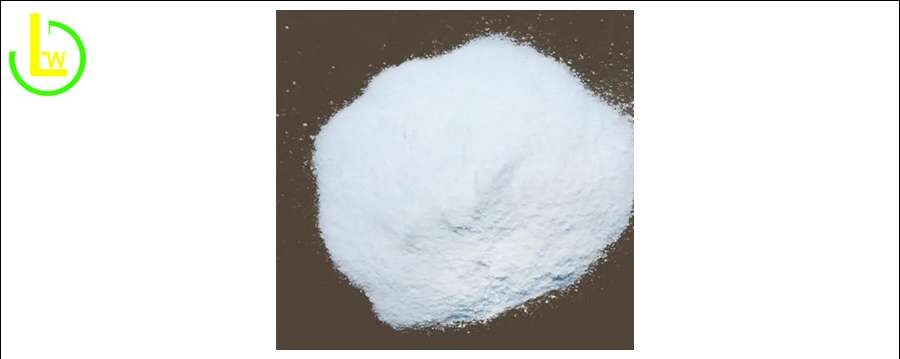
| Appearance | White to off-white crystalline powder | Visual |
| Solubility | Practically insoluble in water; soluble in organic solvents (per TDS) | Per spec |
| Loss on drying (LOD) | Meets agreed limits (per specification) | USP (typical) |
| Related substances | Meets agreed limits (per specification) | HPLC (per EP/USP) |
| Residual solvents | Meets agreed limits (per specification) | GC (typical) |
| Heavy metals | Meets destination-market limits (as required) | ICP-MS (typical) |
Storage, Shelf Life & Packaging
Storage
Store in a cool, dry, and well-ventilated area. Keep tightly sealed in the original container. Protect from moisture and direct sunlight. Avoid repeated opening in high-humidity environments; reseal immediately after each use.
Keep away from strong oxidants. Prevent exposure to water during loading/unloading.
Shelf Life
24 months from the manufacturing date when stored in the original, unopened packaging under recommended conditions. After opening, keep containers sealed between uses and use promptly after opening. Refer to the COA/batch label for the exact retest/expiry information.
Packaging & Logistics
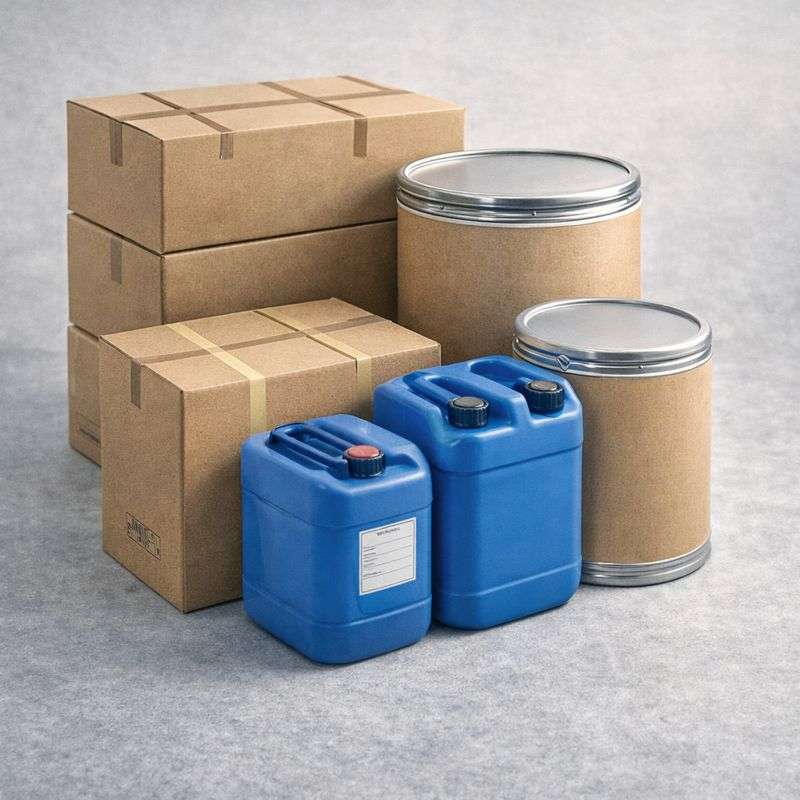
Sample: 10 g / 100 g sealed bag (shipping charged).
Bulk: typically 1 kg / 5 kg aluminum foil bag or 25 kg drum/carton with inner liner.
Export labeling available upon request.
Supply, Documentation & Customization
Documents & Compliance
COA, SDS/MSDS, and TDS/spec sheet available based on product and market requirements.
Customization & Private Label
Custom packing, private label, and labeling support available depending on product type and order scope.
Commercial Support
Sample, lead time, and incoterm options can be discussed according to destination market and supply plan.
Why Source From Lifeworth
Specification-Based Product Selection
We review the required assay basis, pharmacopoeial reference, impurity controls, dosage form and destination market before recommending a product source.
Clear Batch Documentation
Commercial lots are supplied with batch COA. Additional technical and manufacturer documents are confirmed according to the selected source and project requirements.
Qualified Sample Coordination
Evaluation samples can be arranged for qualified projects after confirming the intended application, target specification and required testing plan.
Export Packaging and Logistics Support
We coordinate commercial packaging, export labels, shipping documents and international transport according to the order quantity and destination.
Commercial Follow-Through
From initial specification review to sample evaluation and commercial supply, we help buyers keep product requirements, batch documentation and purchasing conditions aligned.

FAQ
Q1: Is this ivermectin supplied as a veterinary API?
Yes. The material is offered for qualified veterinary pharmaceutical and animal-health formulation projects. Finished-product formulation, dosage determination, registration and legal compliance remain the responsibility of the buyer and finished-product manufacturer.
Q2: What information is required before quotation?
Please provide the intended veterinary dosage form, required pharmacopoeial or manufacturer specification, target assay or quality requirements, estimated quantity, destination country and required regulatory documents. This information helps us identify a suitable product source and documentation package.
Q3: What does the ivermectin assay represent?
Ivermectin specifications commonly evaluate the content of H2B1a and the combined content of H2B1a and H2B1b. Results may be reported on an as-is, anhydrous or dried basis depending on the applicable test method. Buyers should compare products using the same assay basis and analytical standard.
Q4: Are USP, EP and BP specifications available?
Availability depends on the selected manufacturer and current product source. The required pharmacopoeial reference should be confirmed before quotation, sample selection and document review.
Q5: What documents can be provided?
A batch COA is available for supplied commercial lots. SDS/MSDS, TDS or specification sheets and selected technical documents may also be provided. GMP certificates, stability data, registration documents, legalized documents, DMF-related information or other market-specific files must be confirmed separately according to the selected manufacturer.
Q6: Can ivermectin powder be used in veterinary medicated feed?
It may be evaluated for regulated veterinary medicated-premix or medicated-feed formulations where legally permitted. Ivermectin should not be treated as a conventional nutritional feed additive. The finished-product manufacturer must confirm local veterinary-drug regulations, permitted use, formulation requirements and registration obligations.
Q7: Can the same ivermectin grade be used for oral, topical and injectable products?
Not automatically. Different dosage forms may require different controls for particle size, impurities, residual solvents, microbiological quality, solubility behaviour and additional testing. The intended dosage form should be confirmed before product selection.
Q8: Is assay the only important quality parameter?
No. Buyers should also review related substances, total impurities, residual solvents, moisture or loss on drying, residue on ignition, particle size where applicable, and any additional tests required by the approved product specification.
Q9: Are evaluation samples available?
Evaluation samples may be available for qualified commercial projects. Sample quantity, cost, shipping arrangement and supporting documents are confirmed case by case after reviewing the intended application and target specification.
Q10: How should ivermectin powder be stored?
Keep the material tightly sealed in its original packaging in a cool, dry and well-ventilated area. Protect it from moisture, direct sunlight, excessive heat and contamination. Follow the storage instructions stated on the product label, COA and SDS.
Q11: Does this page confirm that the material is approved for a specific finished product or market?
No. The information on this page is provided for preliminary sourcing reference. Finished-product suitability, dosage, safety, registration status, permitted use and destination-market compliance must be independently evaluated by the buyer and finished-product manufacturer.
Need more answers?
Explore our full FAQ library for documentation, compliance, shipping, and ordering guidelines.