
Lycopene Powder (Tomato Extract)
Lifeworth supplies bulk Lycopene Powder from tomato extract for nutrition, supplement, and functional formulation projects. Buyers have access to multiple assay options, sample support, COA, MSDS, flexible packaging, and export-ready bulk supply.
- Lycopene Powder 1%, 3%, 5%, 6%, 10%
- Suitable for capsules, tablets, sachets, premix formulations
- Standard oil-soluble powder; water-dispersible options available
- COA, MSDS, and batch documentation available
- Bulk supply and flexible packaging
Tell us your application, target specification, and destination market so we can support grade selection, documentation review, and packaging recommendations.

Quick Specs
Identity
Plant Part
Extraction Method
CAS Number
Molecular Formula
Molecular Weight
Quality
Assay
Grade
Standards
Assay Method
Handling
Appearance
Form
Solubility
Applications
Commercial Terms
MOQ
MOQ depends on packaging and specification.
Lead Time
3–7 working days for standard items; bulk orders by schedule.
Incoterms
EXW / FOB / CIF / DAP / DDP
Sample
Free sample (shipping charged)
Quality & Documents
COA (per batch) • SDS/MSDS • TDS/Spec sheet (on request). Additional statements depend on product and market.
Product Overview
Lycopene Powder is a tomato extract carotenoid ingredient widely used in dietary supplements and dry-system formulations.
It is supplied in multiple assay levels (1%, 3%, 5%, 6%, 10%) and buyers typically review assay, carrier system, solubility, particle size, and batch documentation before commercial or technical evaluation.
It is suitable for capsules, tablets, sachets, premixes, and functional powder blends, with sample support and COA/MSDS available for sourcing reference.

Comparison
Lycopene powder and lycopene oil are used in different formulation scenarios. Powder grades are generally preferred for capsules, tablets, sachets, premixes, and other dry systems because they are easier to blend, handle, and dose.
Lycopene oil may be more suitable for oil-based systems or projects where lipid compatibility is required. The right choice depends on dosage form, processing conditions, target concentration, and final product design.
Applications
Dietary Supplements
Suitable for capsule fills, tablet blends, sachets, and powder systems where buyers need standardized lycopene content, tomato-derived positioning, and flexible assay choices for different dosage designs.
Food & Beverage
Can be evaluated for nutrition premixes, functional powder blends, and selected color-support concepts where tomato-origin carotenoid ingredients are preferred and dry-format handling is required.
Cosmetics & Personal Care
More commonly considered for beauty-from-within and nutricosmetic concepts rather than conventional topical systems, depending on product format, market positioning, and formulation strategy.
How to Choose the Right Grade / Form
- 1%–3% grades are commonly considered for broader nutrition premix, functional food, and cost-sensitive commercial projects.
- 5%–6% grades are often suitable for mainstream supplement powder applications with balanced loading and cost control.
- 10% grade is usually preferred when a more concentrated powder format or cleaner dosage design is required.
- Standard powder is generally the first choice for capsules, tablets, sachets, premixes, and other dry systems.
- Water-dispersible or encapsulated options should be reviewed separately for water-based or more technically demanding applications.
- Because lycopene is sensitive to light, oxygen, and heat, pilot evaluation and finished-product stability review are recommended before commercialization.
Technical & Formulation Notes
Technical Notes
Evaluate Lycopene Powder for assay, appearance, particle size, moisture, carrier system, and heavy metal control. Protect from light, oxygen, and heat during processing.
Manufacturing & Process
Produced from tomato-derived raw material via extraction, concentration, standardization, and drying. Final powder format varies according to assay, carrier system, and intended application.
Compatibility / Formulation Notes
Lycopene powder is generally easier to use in capsules, tablets, sachets, premixes, and other dry systems.
Lower assay options may suit broader food and nutrition uses, while higher assay grades are often selected for more concentrated supplement projects or cleaner dosage design.
For water-based formulations, dispersible or encapsulated grades should be evaluated before scale-up.
Grade selection should be based on target concentration, dosage design, carrier tolerance, and final product positioning.
Because lycopene is sensitive to light, oxygen, and heat, final-formula stability testing is recommended before commercial launch.
Extended QC & Test Items
Assay by HPLC, identification, appearance, loss on drying, ash, particle size, heavy metals, residual solvents, microbial limits. Batch COA should be confirmed per buyer specifications.
Product specifications
| Test | Specification | Method |
|---|---|---|
| Assay (Lycopene) | 1%, 3%, 5%, 6%, 10% | HPLC |
| Appearance | Red to dark red powder | Visual |
| Odor | Characteristic | Organoleptic |
| Loss on Drying | ≤ 8.0% | USP / Gravimetric |
| Particle Size | 95% pass 80 mesh | Sieve |
| Heavy Metals (as Pb) | ≤ 10 ppm | USP / ICP-MS |
Storage, Shelf Life & Packaging
Storage
Recommended Storage Conditions
Store in a cool, dry, well-ventilated place.
Keep the container tightly closed when not in use.
Protect from moisture, heat, and direct sunlight.
Avoid contact with strong oxidizers and incompatible chemicals.
For best stability, keep at room temperature unless otherwise specified.
Handling Notes
Use clean, dry tools to avoid contamination.
Reseal immediately after sampling.
Shelf Life
Typically 24 months from production date under recommended storage conditions.
Re-test / Expiry
Please refer to the COA for batch-specific retest/expiry date.
After Opening
Use promptly after opening and reseal tightly after each use.
Packaging & Logistics
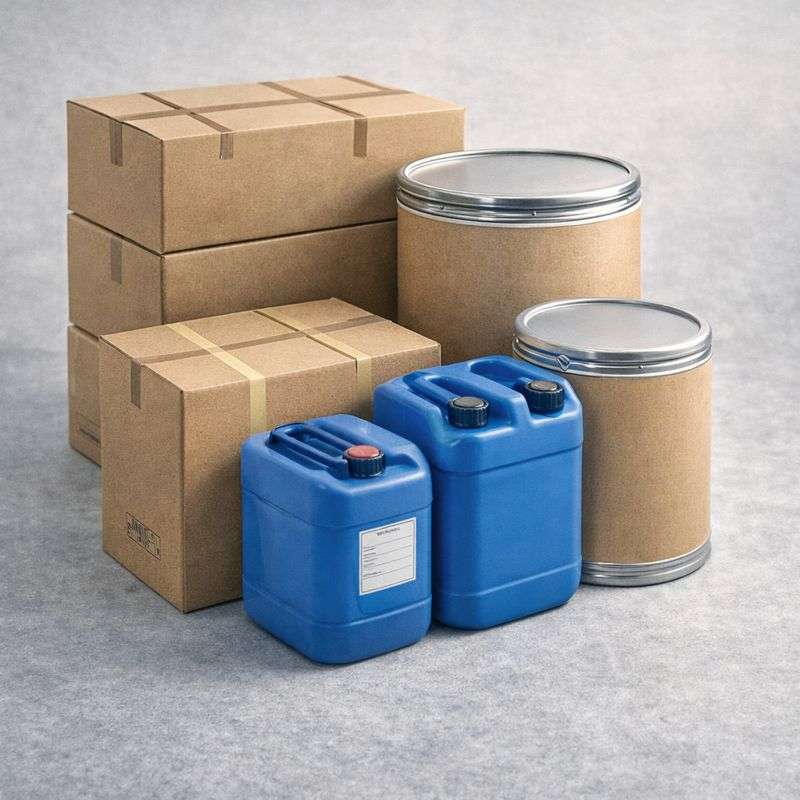
Standard Packing: Inner double PE bags + outer fiber drum / carton (or aluminum foil bag).
Net Weight Options: 1 kg / 5 kg / 10 kg / 25 kg (customizable).
Sample Package: 10 g / 20 g / 50 g / 100 g (available upon request).
Palletizing: Export-grade palletized shipment with stretch film and corner protection.
Shipping Methods: Air freight / Sea freight / Express (DHL/UPS/FedEx).
Lead Time: Typically 3–7 working days (subject to stock and QC release).
Labeling: Product name, batch/lot No., manufacturing date, expiry date, storage conditions.
Supply, Documentation & Customization
Documents & Compliance
COA, SDS/MSDS, and TDS/spec sheet available based on product and market requirements.
Customization & Private Label
Custom packing, private label, and labeling support available depending on product type and order scope.
Commercial Support
Sample, lead time, and incoterm options can be discussed according to destination market and supply plan.
Why Source From Lifeworth
Multiple Commercial Assay Options
Commercial assay levels from 1% to 10% are available for different dosage designs, cost targets, and formulation strategies.
Support for Dry-System Projects
This product line is mainly positioned for capsules, tablets, sachets, premixes, and other dry-format applications where handling and blend compatibility matter.
Documentation & Bulk Supply Coordination
COA, SDS/MSDS, TDS/spec sheet, sample support, and export packaging coordination are available for qualification, sourcing review, and repeat supply planning.

FAQ
1. What is lycopene powder used for?
Lycopene powder is commonly used in dietary supplements, functional food blends, nutrition premixes, and selected cosmetic-positioned projects where tomato-derived carotenoid ingredients are preferred.
2. What assay options are available?
Common commercial assay options include 1%, 3%, 5%, 6%, and 10%, depending on target dosage, carrier system, and formulation requirements.
3. How do I choose between lower and higher assay grades?
Lower assay grades may suit broader premix or food applications, while higher assay grades are often selected for more concentrated supplement projects and cleaner dosage design.
4. How should buyers choose between lycopene powder and lycopene oil?
Lycopene powder is generally preferred for capsules, tablets, sachets, premixes, and other dry systems where handling and dosing convenience are important. Lycopene oil is more suitable for softgels, oil-based systems, or other lipid-phase formulations. The final choice depends on dosage form, target loading, process conditions, and finished-product design.
5. What documents can be provided?
Depending on the project scope, we can usually support COA, SDS/MSDS, and technical data for sourcing review and qualification.
6. Can you support samples and bulk orders?
Yes. Sample support, bulk quotation, packaging discussion, and export logistics coordination can be arranged according to your project needs.
Need more answers?
Explore our full FAQ library for documentation, compliance, shipping, and ordering guidelines.