
Monk Fruit Extract Powder
Monk Fruit Extract Powder for food, beverage and nutrition manufacturers, with multiple Mogroside V assay options, composition confirmation, representative samples and bulk documentation support.
- Multiple Mogroside V assay options
- Food-grade high-intensity sweetener
- Carrier and composition status confirmed by grade
- Samples for flavor and solubility testing
- COA, TDS and SDS/MSDS support
Tell us your application, target specification, and destination market so we can support grade selection, documentation review, and packaging recommendations.

Quick Specs
Identity
INCI Name
Alias
CAS Number
Molecular Formula
Molecular Weight
Quality
Assay
Grade
Assay Method
Handling
Appearance
Form
Solubility
Applications
Commercial Terms
MOQ
MOQ depends on packaging and specification.
Lead Time
3–7 working days for standard items; bulk orders by schedule.
Incoterms
EXW / FOB / CIF / DAP / DDP
Sample
Free sample (shipping charged)
Quality & Documents
COA (per batch) • SDS/MSDS • TDS/Spec sheet (on request). Additional statements depend on product and market.
Product Overview
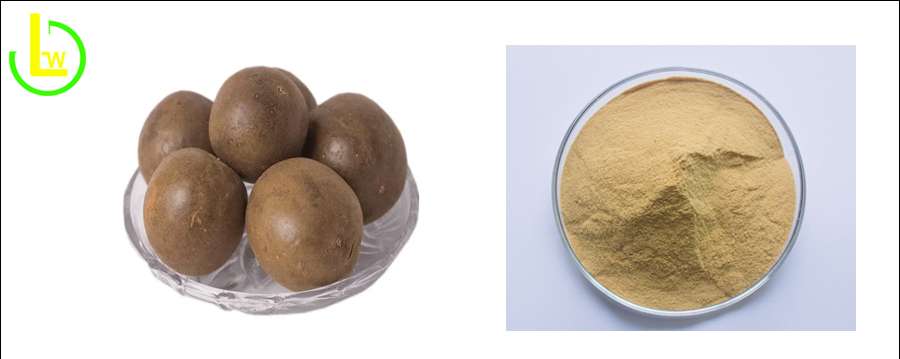
Monk Fruit Extract Powder is a standardized botanical extract commonly used as a high-intensity sweetening ingredient in reduced-sugar food, beverage and nutrition formulations.
It is usually supplied as a light-colored powder identified by its Mogroside V assay, while buyers also review flavor profile, solubility, color, analytical method and complete composition before technical or commercial evaluation.
It is commonly considered for beverages, powdered nutrition products, gummies and reduced-sugar food systems, with representative samples and batch documentation available for sourcing reference.
Applications
Food & Beverage
Monk Fruit Extract Powder is used to provide concentrated sweetness in reduced-sugar and sugar-free foods and beverages. It may be evaluated in flavored water, tea beverages, powdered drinks, dairy products, plant-based beverages, sauces, confectionery and bakery systems where low use levels and controlled sweetness are required. The extract replaces sweetness rather than all physical functions of sugar, so separate solutions may still be needed for bulk, mouthfeel, texture, browning, water activity or stability.
Powdered Nutrition Systems
The powder can be incorporated into protein powders, electrolyte mixes, meal replacements, powdered beverages and sachet products. Because the use level may be low, buyers should evaluate premixing, sweetness uniformity, powder distribution and interaction with proteins, minerals, acids and flavors; staged dilution may improve batch consistency.
Gummies, Chewables and Supplements
Monk Fruit Extract Powder may be considered for gummies, chewables, effervescent products, tablets and powdered supplements where sweetness or flavor masking is needed. The selected grade should be evaluated against serving size, processing conditions and destination-market requirements, while separate ingredients may still be needed for structure, binding and bulk.
Customized Sweetener Systems
Monk Fruit Extract may be combined with stevia, allulose, erythritol, soluble fiber or other sweetening and bulking ingredients to create a more balanced sweetness profile. A formulated sweetener blend should be specified and labeled separately from unblended Monk Fruit Extract Powder and supported by a complete composition declaration.
How to Choose the Right Grade / Form
How to Choose the Right Monk Fruit Product and Mogroside V Grade
Monk fruit ingredients are available in several commercial forms, and products from the same botanical source should not automatically be treated as interchangeable. Buyers should first confirm whether they need a high-intensity extract powder, a juice-derived powder, a liquid concentrate or a finished sweetener blend.
For Monk Fruit Extract Powder, the next step is to select the appropriate Mogroside V assay according to sweetness target, sensory requirements, use level, formulation cost and commercial quantity.
| Selection Area | Option | Primary Specification or Selection Reason |
|---|---|---|
| Product Type | Monk Fruit Extract Powder | Standardized by Mogroside V and used for high-intensity sweetening at relatively low inclusion levels. |
| Product Type | Monk Fruit Juice Powder | Evaluated by juice-derived solids, carrier status, Mogroside V, color and flavor; generally used where more fruit character is required. |
| Product Type | Monk Fruit Juice Concentrate | Evaluated by Brix, Mogroside V, color, clarity and flavor profile for liquid food and beverage systems. |
| Product Type | Monk Fruit Sweetener Blend | Evaluated by complete composition and sweetener ratio; may contain erythritol, allulose, stevia, fiber or other ingredients. |
| Mogroside V Grade | 20%–25% | Commonly evaluated for cost-sensitive formulations, sweetener blends or projects requiring greater formulation flexibility. |
| Mogroside V Grade | 40% | May provide a practical balance between active concentration, sensory profile and commercial cost for general food and beverage projects. |
| Mogroside V Grade | 50% | A common commercial grade for concentrated sweetening in food, beverage and nutrition formulations. |
| Mogroside V Grade | 60% | Provides a higher Mogroside V concentration for projects targeting a lower nominal use level, subject to sensory and application validation. |
| Mogroside V Grade | Customized Assay | Intermediate or higher-assay specifications may be discussed according to the target analytical basis, order quantity and production feasibility. |
Key Specification Checks
Confirm the Assay Basis
The stated percentage should refer specifically to Mogroside V and the analytical method should be identified. Mogroside V should not be treated as equivalent to total mogrosides, total sweet glycosides or a general extract ratio.
Confirm the Complete Composition
“Carrier-free,” “without erythritol” and “pure monk fruit” are not automatically equivalent claims. Buyers should request a complete composition declaration confirming the standardized extract content, carrier type and percentage where applicable, processing aids, anticaking agents and any additional sweeteners.
Confirm Application-Critical Limits
Color, flavor, solubility, solution clarity, moisture, heavy metals and microbiological limits should be reviewed according to the finished application. Clear beverages may prioritize color and clarity, while powdered blends may place greater importance on flow, mixing uniformity and moisture control.
Validate the Grade in the Actual Formulation
These product and assay options are evaluation starting points rather than fixed application rules. Lower-assay grades are not automatically lower-quality products, and a higher Mogroside V assay does not automatically provide the best flavor, clarity, dosage efficiency or total formulation cost. Representative samples should be tested before commercial approval.
Technical & Formulation Notes
Technical Notes
Monk Fruit Extract Powder is evaluated primarily according to its Mogroside V assay, but assay alone does not define overall product suitability. Buyers should confirm that the stated percentage refers specifically to Mogroside V, review the analytical method and compare flavor, color, solubility, complete composition and batch consistency.
The commercial product remains a botanical extract containing multiple naturally occurring constituents. It should not be described as isolated or pure Mogroside V unless the supplied material is specifically manufactured and documented as a purified single compound.
Manufacturing & Process
Commercial Monk Fruit Extract Powder is produced from Siraitia grosvenorii fruit through extraction, filtration, purification, concentration and drying. The degree of purification and drying conditions may influence the final Mogroside V concentration, powder color, flavor profile, solubility and commercial cost.
Some grades may be supplied without an added carrier, while others may contain a carrier or processing aid to support drying, flow, handling or stability. The complete composition must therefore be confirmed for the exact grade offered.
Sensory & Solubility Evaluation
Mogroside V assay indicates active concentration but does not fully predict sensory performance. Buyers should also evaluate sweetness onset, sweetness duration, lingering sweetness, characteristic fruit or herbal notes, solution clarity and interaction with acids, proteins, minerals, flavors and other sweeteners.
Relative sweetness figures should be treated as formulation guidance rather than a universal guarantee. Perceived sweetness can vary with dosage, sucrose reference concentration, pH, serving temperature and the finished-product matrix.
Compatibility / Formulation Notes
Monk Fruit Extract Powder can replace part or all of the sweetness contribution of sucrose, but it does not independently replace sugar's bulk, mouthfeel, browning, water activity, freezing-point control or structural functions. Reformulation requirements depend on the finished product and the degree of sugar reduction.
For Beverages
Review sweetness onset, lingering sweetness, flavor interaction, powder color and solution clarity under the actual product pH, processing temperature and serving conditions. A higher Mogroside V assay does not automatically produce a clearer or better-tasting beverage.
For Powder Blends and Sachets
Because the extract is often used at relatively low levels, direct addition may create sweetness variation if the blend is not properly premixed. A staged dilution or carrier premix may improve distribution in protein powders, electrolyte blends and sachet products.
For Bakery, Gummies and Confectionery
Monk Fruit Extract provides sweetness but does not replace the bulk, browning, moisture retention or structural contribution of sucrose. Substantial sugar reduction may require bulking agents, fibers, polyols, allulose, hydrocolloids or other formulation adjustments.
For Sweetener Combinations
The extract may be combined with stevia, allulose, erythritol or other sweeteners to modify sweetness onset, duration and aftertaste. The optimum ratio depends on the product base, serving size, flavor system and sweetness target.
Pilot Testing
Representative samples should be tested in the actual formulation before commercial approval. Evaluation should include taste, dosage, color, solubility, solution clarity, stability, batch uniformity and interaction with other ingredients.
Extended QC & Test Items
Commercial evaluation may include Mogroside V, identification, total mogrosides where applicable, moisture, ash, color, solubility, particle size, heavy metals and microbiological limits. Depending on the destination market, buyers may also review pesticide residues, residual solvents, allergens, GMO status, processing aids, carrier status and country of origin.
COA, TDS and SDS/MSDS should correspond to the actual grade and production source rather than a general Monk Fruit Extract template.
Product specifications
| Test | Specification | Method |
|---|---|---|
| Appearance | Light yellow to off-white or white powder | Visual |
| Identification | Conforms | Agreed chromatographic or identification method |
| Mogroside V | According to selected grade | HPLC |
| Total Mogrosides | Reported where applicable | HPLC or agreed method |
| Complete Composition | Declared for selected grade | Composition declaration |
| Carrier Status | Declared for selected grade | Composition declaration |
| Moisture / Loss on Drying | Per agreed specification | Agreed method |
| Ash | Per agreed specification | Agreed method |
| Solubility | Water-soluble; clarity per grade | Visual or agreed method |
| Particle Size | Per agreed specification | Sieve |
| Lead | Per food-grade and market requirement | ICP-MS or agreed method |
| Arsenic | Per food-grade and market requirement | ICP-MS or agreed method |
| Cadmium | Per food-grade and market requirement | ICP-MS or agreed method |
| Mercury | Per food-grade and market requirement | ICP-MS or agreed method |
| Total Plate Count | Per agreed specification | ISO, USP or agreed method |
| Yeast and Mold | Per agreed specification | ISO, USP or agreed method |
| Coliforms | Per agreed specification | Agreed method |
| E. coli | Negative or per agreed specification | Agreed method |
| Salmonella | Negative in specified sample quantity | Agreed method |
Storage, Shelf Life & Packaging
Storage
Store in a cool, dry and well-ventilated area, protected from direct sunlight, heat, moisture and strong odors.
Keep the package tightly sealed after opening and use clean, dry tools during handling.
Shelf Life
A shelf life of approximately 24 months is common under recommended storage conditions.
Final shelf life should follow the current product specification, packaging configuration and batch documentation.
Packaging & Logistics
Sample Packing
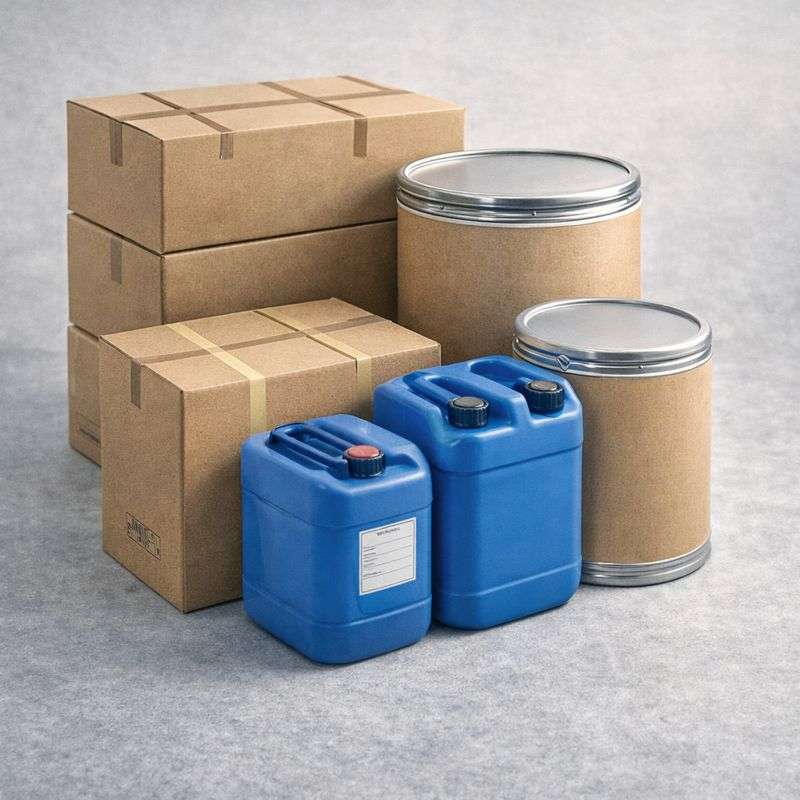
Representative samples may be supplied in sealed food-grade bags for qualified formulation, flavor and solubility testing. Sample size, availability and shipping arrangements are confirmed according to the project and destination.
Bulk Packing
Typical options may include 1 kg inner packs and 20 kg or 25 kg bulk cartons or drums with food-grade liners. The final packaging format depends on the selected grade, quantity and current production arrangement.
Customization
Customization discussions may cover Mogroside V assay, carrier status, particle-size requirements, packaging and selected commercial specification limits. Intermediate and higher-assay grades may be developed or adjusted according to the target specification, analytical method, commercial quantity and production feasibility.
Logistics Support
Air and sea shipment options may be arranged according to quantity, destination and required delivery schedule. Buyers should provide the destination country, postcode, expected quantity, preferred trade term and requested delivery date for an accurate quotation.
Document Package
Depending on the selected grade and destination market, the document package may include batch COA, TDS, SDS/MSDS, complete composition declaration, allergen statement, GMO statement, country-of-origin statement, nutritional information, pesticide statement or test report, residual-solvent statement, production flowchart and currently valid food-safety, Kosher, Halal or Organic certificates where applicable.
Supply, Documentation & Customization
Documents & Compliance
COA, SDS/MSDS, and TDS/spec sheet available based on product and market requirements.
Customization & Private Label
Custom packing, private label, and labeling support available depending on product type and order scope.
Commercial Support
Sample, lead time, and incoterm options can be discussed according to destination market and supply plan.
Why Source From Lifeworth
Defined Specification Clarity
The offered grade is identified by Mogroside V assay, analytical basis, complete composition, carrier status and application-relevant physical and microbiological requirements, helping buyers compare products on a consistent basis.
Application-Based Grade Selection
Available grades can be reviewed according to target sweetness, application base, color, flavor, solubility and commercial use level rather than recommending the highest assay by default.
Composition and Batch Documentation
Commercial supply can be supported with batch COA, TDS and SDS/MSDS, with additional composition, quality and regulatory documents reviewed according to the selected grade and destination market.
Export-Ready Bulk Supply
Samples, trial quantities and commercial packaging can be coordinated for international food, beverage and nutrition projects, with shipping terms, documentation and lead time confirmed according to the destination and quantity.

FAQ
1) What Mogroside V assay options are available?
Common commercial options may include Mogroside V 20%, 25%, 40%, 50% and 60%. Intermediate or higher-assay specifications may also be discussed according to the required analytical basis, order quantity and production feasibility. Availability should be confirmed against the current specification and batch documentation.
2) How should buyers compare different Mogroside V assay grades?
Different assay grades provide different concentrations of Mogroside V and may require different use levels. Buyers should compare analytical basis, flavor profile, color, solubility, complete composition and formulation cost rather than selecting by percentage alone.
3) Does a higher Mogroside V assay mean better quality?
Not automatically. A higher assay indicates more Mogroside V per kilogram, but overall suitability also depends on test method, complete composition, flavor, clarity, carrier status and batch consistency. The highest assay may not provide the best sensory result or total formulation cost.
4) Is Monk Fruit Extract Powder the same as Monk Fruit Juice Powder?
No. Monk Fruit Extract Powder is a purified high-intensity sweetener standardized to a relatively high Mogroside V content. Monk Fruit Juice Powder is produced from juice concentrate and generally has more fruit character, a different Mogroside V range and a different use profile.
5) Does Monk Fruit Extract Powder contain erythritol or other sweeteners?
Unblended Monk Fruit Extract Powder does not automatically contain erythritol, allulose or stevia. However, some commercial monk fruit products are formulated sweetener blends, so buyers should request a complete composition declaration for the exact material offered.
6) What is the difference between carrier-free and pure Monk Fruit Extract?
Carrier-free means that no carrier has been added to the selected grade, subject to written confirmation. "Pure monk fruit" is a broader and potentially ambiguous marketing phrase and does not automatically confirm assay, carrier status or complete composition.
7) Can you provide samples, batch documents and commercial packaging?
Representative samples may be arranged for qualified formulation projects. Available support may include batch COA, TDS, SDS/MSDS and additional product-specific documents, with commercial packaging, lead time and shipping terms confirmed according to the selected grade, quantity and destination.
Need more answers?
Explore our full FAQ library for documentation, compliance, shipping, and ordering guidelines.