
Monosodium Glutamate Powder
Suitable for buyers sourcing monosodium glutamate powder for seasoning, snack, instant food, and savory processing projects, with review typically focused on purity, mesh selection, packaging format, document scope, and destination-market supply requirements.
- 99% purity MSG for food processing and seasoning systems
- Conventional mesh options from 20 to 100 mesh
- Suitable for bulk packing and retail or private-label repacking
- COA, SDS/MSDS, and specification sheet available
- Packaging and supply support aligned to destination-market needs
Tell us your application, target specification, and destination market so we can support grade selection, documentation review, and packaging recommendations.

Quick Specs
Identity
INCI Name
Alias
CAS Number
Molecular Weight
Quality
Assay
Grade
Standards
Assay Method
Handling
Appearance
Form
Solubility
Applications
Commercial Terms
MOQ
MOQ depends on packaging and specification.
Lead Time
3–7 working days for standard items; bulk orders by schedule.
Incoterms
EXW / FOB / CIF / DAP / DDP
Sample
Free sample (shipping charged)
Quality & Documents
COA (per batch) • SDS/MSDS • TDS/Spec sheet (on request). Additional statements depend on product and market.
Product Overview
Monosodium Glutamate Powder is a food-grade flavor enhancer commonly used in seasoning, snack, instant food, and savory processing applications.
It is usually supplied as 99% purity crystalline powder or granules, and buyers often review mesh size, packaging format, and document scope before technical or commercial evaluation.
It is commonly considered for compound seasoning, noodle seasoning, soup bases, and savory food systems, with sample support and routine supply documents available for sourcing reference.

Applications
Food & Beverage
Commonly used in compound seasoning, soup bases, sauces, snacks, instant noodles, and savory processed foods where umami enhancement and taste consistency are required.
Industrial Food Manufacturing
Suitable for factories that need stable flavor performance, controlled particle size, and easy handling in dry blending, premix, or continuous production systems.
Private Label / Retail Packing
Can also fit projects that require bulk MSG for repacking into retail sachets, household packs, foodservice packs, or market-specific consumer formats.
Custom Compound Seasoning
For buyers developing customized seasoning systems, MSG can be reviewed as a core umami ingredient alongside salt, sugar, spices, nucleotides, or other savory components.
How to Choose the Right Grade / Form
For standard food processing
Choose conventional 99% food-grade MSG when the target is general seasoning, savory foods, and bulk factory use.
For dry blending and seasoning mix projects
Select mesh size according to blending uniformity, flow behavior, and the appearance target of the final seasoning system.
For retail or private-label packaging
Review not only purity but also pack size, bag format, repacking suitability, and destination-market labeling requirements.
For OEM compound flavor systems
Where buyers need more than standard bulk MSG, it is useful to confirm whether custom mesh, compound formulation, or tailored packing support is required.
Technical & Formulation Notes
Technical Notes
MSG is typically reviewed as a specification-led flavor ingredient where purity, crystal size consistency, solubility, and sensory performance matter more than long-form descriptive marketing.
For routine purchasing, buyers usually confirm assay basis, mesh range, and suitability for blending or direct seasoning use.
Manufacturing & Process
Commercial MSG is generally produced through fermentation and then refined into crystalline product forms.
For supply evaluation, the more important points are batch consistency, particle-size control, moisture handling, and packaging protection during storage and export.
Compatibility / Formulation Notes
For dry seasoning blends, confirm particle-size compatibility with salt, sugar, spices, and other powder ingredients to support good blend uniformity and finished-pack appearance.
For instant food systems, review dissolution behavior and distribution consistency in soup powders, noodle seasonings, or savory premixes.
Pilot testing is recommended when MSG is used together with nucleotides, spices, or other functional taste ingredients to confirm the target flavor profile.
Use sealed, moisture-protected packaging and keep the product in a dry environment to support stable handling during warehousing and transport.
Extended QC & Test Items
Routine review may include assay, loss on drying or moisture-related control, clarity or solubility checks, mesh confirmation, and selected contaminant or compliance items depending on the destination market and customer specification.
Product specifications
| Test | Specification | Method |
|---|---|---|
| Appearance | White crystalline powder or granules | Visual |
| Assay | 99.0% min | Per agreed specification |
| Mesh | 20 / 40 / 60 / 80 / 100 mesh | Sieve analysis |
| Solubility | Freely soluble in water | Per agreed specification |
| pH | Per agreed specification | Per agreed specification |
| Loss on Drying | Per agreed specification | Per agreed specification |
| Documents | COA per batch; SDS/MSDS and TDS available | Reference |
Storage, Shelf Life & Packaging
Storage
Store in a cool, dry place in tightly sealed containers.
Protect from moisture during storage, transportation, and repacking.
Shelf Life
Shelf life should follow the agreed specification and original packaging condition.
Batch label, packaging integrity, and storage compliance should be checked before use.
Packaging & Logistics
Sample Packing
Small evaluation samples can be arranged according to project needs.
Bulk Packing
Standard bulk packing is typically 25 kg per bag, with other packing formats reviewed according to order requirements.
Customization
Support may include mesh selection, repacking format discussion, and private-label or consumer-pack oriented packaging coordination.
Logistics & Documents
COA, SDS/MSDS, TDS/specification sheet, and related shipment-support documents can be arranged according to the agreed supply plan.
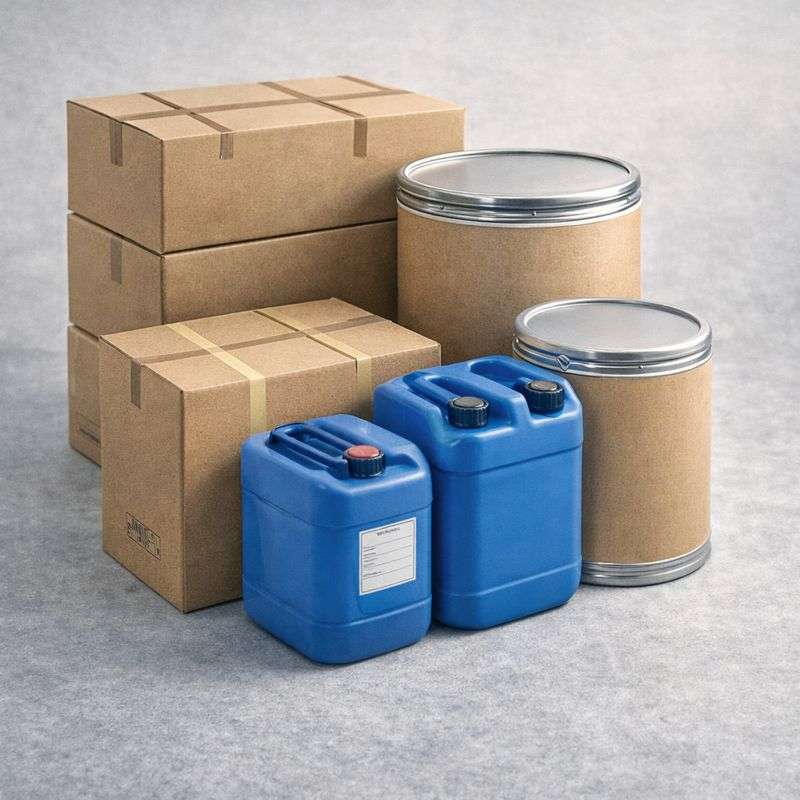
Supply, Documentation & Customization
Documents & Compliance
COA, SDS/MSDS, and TDS/spec sheet available based on product and market requirements.
Customization & Private Label
Custom packing, private label, and labeling support available depending on product type and order scope.
Commercial Support
Sample, lead time, and incoterm options can be discussed according to destination market and supply plan.
Why Source From Lifeworth
Defined specification clarity
Buyers can review MSG projects based on purity, mesh size, packaging format, and agreed technical documents instead of relying on generic product claims.
Customizable key targets
Support can be aligned to particle-size preference, order format, and destination-market packaging needs.
Batch documentation support
Routine commercial review can include COA, SDS/MSDS, and specification documents for purchasing and import coordination.
Export-ready bulk supply
Packaging, labeling, and shipment coordination can be arranged for international sourcing projects.

FAQ
1) What purity is commonly supplied for Monosodium Glutamate Powder?
Most commercial projects start from 99% food-grade MSG, with the final supply basis confirmed by the agreed specification and target market.
2) What mesh sizes are available?
Common supply options include 20 mesh, 40 mesh, 60 mesh, 80 mesh, and 100 mesh, with mesh selection based on the intended formulation or packing requirement.
3) Is the product suitable for seasoning and snack applications?
Yes. MSG is commonly reviewed for savory seasoning systems, snacks, soups, noodle seasonings, and other processed food applications where umami enhancement is required.
4) Can you support small packs or private-label style packaging?
Yes. In addition to standard bulk packing, smaller pack formats can be reviewed according to the project.
5) What documents are usually available?
Routine supply documents commonly include COA, SDS/MSDS, and TDS/specification sheets.
6) How should Monosodium Glutamate Powder be stored?
It should be kept sealed in a cool, dry place and protected from moisture during storage and transportation.
Need more answers?
Explore our full FAQ library for documentation, compliance, shipping, and ordering guidelines.