
Jojoba Beads for Cosmetics
Lifeworth supplies jojoba beads for facial scrubs, cleansers, body-care products, soaps and topical gel formulations.
Different color and particle-size options can be evaluated according to the desired exfoliating feel, visual appearance and finished-product application. Sample matching is available for projects requiring specific bead size, color or rubbing behavior.
- Multiple particle sizes: 20–30, 30–40, 40–60 and 60–80 mesh
- Multiple colors available, with custom matching support
- Rounded particles for relatively gentle physical exfoliation
- Suitable for facial, body-care, cleanser, soap and gel formulations
- Sample evaluation and project-based customization support
- COA, SDS/MSDS and TDS or specification support by grade
Tell us your application, target specification, and destination market so we can support grade selection, documentation review, and packaging recommendations.

Quick Specs
Identity
INCI Name
Alias
Quality
Standards
Assay Method
Handling
Appearance
Form
Solubility
Applications
Commercial Terms
MOQ
MOQ depends on packaging and specification.
Lead Time
3–7 working days for standard items; bulk orders by schedule.
Incoterms
EXW / FOB / CIF / DAP / DDP
Sample
Free sample (shipping charged)
Quality & Documents
COA (per batch) • SDS/MSDS • TDS/Spec sheet (on request). Additional statements depend on product and market.
Product Overview
Jojoba Beads are rounded cosmetic particles used mainly for physical exfoliation and visible product differentiation in rinse-off and selected specialized personal care formulations. They are commonly evaluated for facial scrubs, cleansers, body-care products, soaps and gels requiring a smoother particle shape than irregular natural scrub materials.
The commercial name “Jojoba Beads” does not always refer to one universal composition. Depending on the manufacturer and grade, the bead system may be based on jojoba esters, hydrogenated jojoba oil or a composite wax structure containing jojoba-derived material. The complete INCI and composition should therefore be confirmed for the exact product selected.
Particle size directly affects visibility, rubbing feel and perceived exfoliating intensity. Smaller particles are generally considered for facial or milder cleansing concepts, while larger particles may provide a more noticeable scrub effect and stronger visual identity in body-care, soap or topical gel formulations.
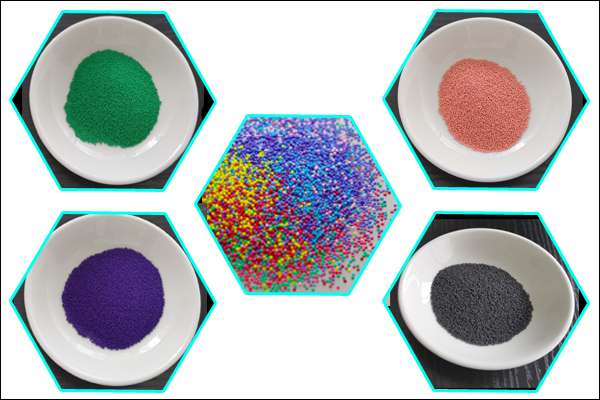
Color is another important selection factor. Natural or white beads support a neutral and ingredient-focused appearance, while blue, pink, green, black, red or other selected colors can help differentiate the finished product and match the customer’s brand or reference sample.
The most suitable grade should be selected through sample testing because the finished result depends not only on mesh size and color, but also on bead composition, hardness, processing temperature, suspension system and the required behavior during rubbing.
Buyers comparing jojoba beads with other plant-derived particle systems can also review our cellulose-based cosmetic beads.
Applications
Facial Scrubs and Cleansers
Smaller and relatively smooth jojoba beads can be evaluated for facial scrubs and cleansers requiring controlled physical exfoliation and a visible bead effect. Particle size, hardness and use level should be selected carefully to achieve the intended skin feel without creating an unnecessarily aggressive scrub experience.
Body Scrubs and Body Wash
Larger or more visible beads may be considered for body-care products where stronger exfoliating identity, texture and visual differentiation are required. The selected grade should be tested for suspension, distribution, rubbing feel and rinse-off behavior in the actual formulation.
Shower Gels and Liquid Cleansers
Colored jojoba beads can add light exfoliation and visible contrast to shower gels and liquid cleanser systems. Formulation viscosity and yield value should be sufficient to maintain acceptable particle distribution during storage, while the surfactant system should not soften or damage the beads prematurely.
Soaps and Syndet Bars
Jojoba beads may be incorporated into solid cleansing products for physical scrub effects and visible differentiation. Resistance to processing temperature, mixing stress and long-term storage should be evaluated before commercial scale-up.
Topical Gels and Specialized Leave-On Concepts
Selected grades may be evaluated for topical gels or specialized leave-on concepts where the beads are intended to remain visible in the package and soften, break or disappear during rubbing. Suitability must be confirmed by the complete composition, skin feel and testing in the customer’s actual formulation.
When the project requires pigment release or a visible color transformation rather than exfoliation alone, review our color-releasing beads for cosmetics.
Scalp and Hair-Care Products
Jojoba beads may be considered for scalp scrubs and rinse-off hair-care products requiring visible particles and physical cleansing. Particle size, rinsability and compatibility with surfactants, conditioning ingredients and viscosity systems should be confirmed.
For projects requiring visible capsules that release botanical oils or other oil-compatible ingredients during application, explore our oil capsule beads for cosmetic formulations.
How to Choose the Right Grade / Form
Select by Particle Size
Particle size determines how visible the beads are, how they feel during rubbing and which type of finished product they are more likely to suit. Higher mesh numbers generally indicate smaller particles, but the actual particle-size range and physical sample should always be reviewed before commercial selection.
60–80 Mesh
This is the smallest regular particle direction among the listed options. It may be considered for facial cleansers, mild facial scrubs and products requiring a finer, less visually dominant bead effect. The actual exfoliating feel still depends on bead hardness, shape, dosage and formulation base.
40–60 Mesh
This is a practical middle range for facial cleansers, light exfoliating products and general personal care formulations. The particles are usually visible enough to support product differentiation while remaining smaller than the grades commonly selected for stronger body-care concepts.
30–40 Mesh
This range provides a more noticeable particle appearance and rubbing feel. It may be evaluated for body wash, body scrubs, scalp-care products and topical gels where the beads need to remain clearly visible in the packaged product.
20–30 Mesh
This is a larger particle direction suitable for projects requiring a strong visual effect, a more noticeable application experience or closer matching to an existing large-bead product. It may be considered for body-care products, soaps and specialized gels, subject to the required skin feel and rubbing behavior.
Choose by Application
For facial products, begin with smaller particle ranges and evaluate the mildness in the complete formula. For body scrubs, soaps and scalp-care products, medium or larger particles may provide a more noticeable scrub effect. For transparent gels, the selection should also consider suspension, particle contrast and whether the beads are expected to soften, break or disappear during rubbing.
Choose by Color
White, natural or skin-tone beads support neutral and ingredient-focused formulations. Blue, pink, green, red, purple, black and other available colors may be selected to match the base formula, brand identity or an existing reference product. Color should be evaluated in the actual formulation because the final visual effect may differ between transparent, translucent and opaque bases.
Confirm the Required Rubbing Behavior
Standard exfoliating beads may remain noticeable or gradually wear down during use. Some specialized projects require the beads to soften, break into smaller particles or disappear without leaving visible color on the skin. This requirement should be stated clearly because particle size alone does not determine the final rubbing behavior.
Review Processing and Suspension
Confirm the formulation viscosity, approximate pH, maximum processing temperature, mixing speed and the stage at which the beads will be added. Excessive heat or shear may soften or deform certain grades, while low-viscosity formulations may require a suitable suspension system to reduce settling or flotation.
Information Required for Sample Selection
Please provide the finished-product type, application area, preferred color, target particle size, required scrub intensity, expected rubbing behavior, processing temperature, approximate pH, sample quantity and estimated commercial order quantity. When matching an existing product, photos, physical samples or the current particle-size specification are especially helpful.
Technical & Formulation Notes
Technical Notes
Jojoba beads should be evaluated by complete composition, particle-size range, color consistency, shape, hardness and performance in the finished formulation. Commercial names such as Jojoba Beads, Jojoba Pearls and Jojoba Wax Beads may refer to different material systems, so grade-specific documentation should be reviewed before product approval.
Manufacturing & Process
Depending on the grade, commercial production may involve preparation of a jojoba-derived or composite wax material, coloring, bead formation, cooling, screening and particle-size grading. Exact production details and composition vary by manufacturer and product series.
Compatibility / Formulation Notes
- For facial products, evaluate particle mildness, size and dosage.
- For body-care products, review scrub intensity and rinse-off performance.
- For transparent gels, confirm suspension, color contrast and particle distribution.
- For soaps and syndet bars, assess temperature resistance and bead integrity.
- Avoid excessive heat or prolonged high-shear mixing unless the selected grade has been evaluated under those conditions.
Extended QC & Test Items
Typical review items may include appearance, color, particle-size range, particle shape, odor, bead uniformity, hardness or breakdown behavior, formulation compatibility and batch traceability linked to the COA.
Product specifications
| Test | Specification | Method |
|---|---|---|
| Appearance | Colored or natural round beads | Visual |
| Type | Soluble / Insoluble | Per Spec |
| Particle Size | According to selected mesh | Sieve analysis / per spec |
| Color | According to selected grade | Visual / per spec |
| Odor | Characteristic | Organoleptic |
| Base Compatibility | According to intended system | Pilot test / per project |
Storage, Shelf Life & Packaging
Storage
Store in a cool, dry and well-closed condition away from direct heat, strong light and moisture. Keep the original package tightly sealed after opening and avoid storage conditions that may cause the beads to soften, agglomerate, fade or deform.
Handling
Avoid excessive processing temperature, prolonged high-shear mixing and unnecessary compression unless the selected grade has been tested under those conditions. The beads are generally added at a suitable later stage of production to help maintain particle shape, color and integrity.
Shelf Life
Shelf life depends on the selected bead composition, color system and packaging format. Refer to the product label, COA, TDS or grade-specific specification for the declared shelf-life period of the supplied batch.
Packaging & Logistics
Sample Packaging
Samples can be arranged for particle-size comparison, color selection and formulation testing. Buyers should evaluate the beads in the actual product base before confirming the commercial grade.
Commercial Packaging
Bulk packaging may include protective foil bags, cartons, drums or another suitable configuration according to bead composition, order quantity and transportation requirements. The final packing format should be confirmed with the quotation.
Logistics and Documentation
Transportation conditions should protect the product from heat, moisture, compression and rough handling. Custom labels, shipping marks and export packing can be discussed according to destination and order quantity. Grade-specific COA, SDS/MSDS, TDS and composition information should be confirmed before shipment.

Supply, Documentation & Customization
Documents & Compliance
COA, SDS/MSDS, and TDS/spec sheet available based on product and market requirements.
Customization & Private Label
Custom packing, private label, and labeling support available depending on product type and order scope.
Commercial Support
Sample, lead time, and incoterm options can be discussed according to destination market and supply plan.
Why Source From Lifeworth
Clear Particle-Size and Color Selection
We help buyers compare available mesh ranges, colors and visual styles according to the intended application rather than treating all jojoba beads as one interchangeable product.
Application-Based Grade Matching
Selection considers the target body area, desired exfoliating intensity, formulation type, processing conditions and required behavior during rubbing.
Sample Comparison Support
Samples can be arranged to compare particle size, color, hardness, visual appearance and in-formula behavior before the commercial grade is confirmed.
Grade-Specific Composition Review
Jojoba bead products may use different jojoba-derived or composite wax systems. We therefore confirm the available INCI, composition and technical documents for the selected grade rather than relying only on the commercial product name.
Customization and Export Coordination
Custom colors, selected particle-size directions, packaging, labeling and international shipping support can be discussed according to the project scope and commercial quantity.

FAQ
What size jojoba beads are suitable for facial scrubs?
Smaller particle ranges such as 60–80 mesh or 40–60 mesh are generally the first directions evaluated for facial scrubs and cleansers. The final choice should also consider bead hardness, dosage, shape and the desired level of exfoliation.
What is the difference between 20–30 mesh and 40–60 mesh jojoba beads?
20–30 mesh beads are larger and create a stronger visible particle effect and more noticeable rubbing experience. The 40–60 mesh range is smaller and is generally more suitable for facial cleansers, mild scrubs and products requiring a finer appearance.
Which jojoba bead size is suitable for body wash?
The 30–40 mesh or 40–60 mesh ranges may be evaluated for body wash, depending on the desired visibility and scrub intensity. Larger 20–30 mesh beads may be considered when a stronger visual effect is required.
Can jojoba beads be used in transparent gels?
Yes. Selected jojoba bead grades may be used in transparent or translucent gels. The formulation should be tested for suspension, particle distribution, color contrast, long-term stability and behavior during rubbing.
Do jojoba beads dissolve or disappear during rubbing?
This depends on the selected grade. Some beads remain noticeable, some gradually soften or wear down, and specialized grades may break or disappear more completely during rubbing. The required behavior should be confirmed before sample selection.
Can you match the color and size of the beads in my current product?
Yes, sample matching may be discussed. Please provide clear photos, an existing bead sample, the approximate particle-size range and the required behavior during rubbing. A physical reference sample usually provides the most reliable basis for matching.
Can colored jojoba beads stain the skin?
A suitable grade should not create unacceptable staining under its intended conditions of use, but color-release and skin-staining behavior must be tested in the complete formulation. This is especially important for dark or strongly colored beads and specialized breakable grades.
Will jojoba beads melt during manufacturing?
Certain jojoba-based or wax-based bead systems may soften or deform when exposed to excessive heat. The exact temperature tolerance depends on the grade, so the beads are generally added after the main high-temperature processing stage under controlled mixing conditions.
At what stage should jojoba beads be added?
They are normally added during a later cool-down or finishing stage after the main high-temperature and high-shear steps. The recommended addition temperature and mixing conditions should be confirmed for the selected grade.
Do jojoba beads require a suspending agent?
Possibly. Suspension depends on the particle size, density, formulation viscosity and yield value. Low-viscosity cleansers and gels may require a suitable thickener or suspension system to keep the beads evenly distributed.
How much jojoba beads should be added to a formulation?
The appropriate use level depends on the desired visual effect, exfoliating intensity, particle size and formulation type. A low level may provide a subtle visible effect, while a higher level creates a more noticeable scrub experience. The final dosage should be determined through formulation testing rather than applying one universal percentage.
Are jojoba beads suitable for facial cleansers?
Yes. Smaller and relatively smooth grades are commonly evaluated for facial cleansers requiring mild physical exfoliation and visible particles. The finished product should be tested for skin feel, particle distribution and rinsing behavior.
Can jojoba beads be used in soaps and syndet bars?
Yes, selected grades may be used in soaps and syndet bars. The beads should be evaluated for resistance to processing temperature, mechanical mixing, bar storage and the desired scrub effect.
Are jojoba beads available in bulk or wholesale quantities?
Yes. Samples and commercial quantities can be supplied according to the selected color, particle-size range and product grade. MOQ, packaging and lead time should be confirmed after the specification is selected.
Can the color and particle size be customized?
Standard color and particle-size options are available, and project-based customization may also be discussed. MOQ, technical feasibility and production time depend on the required color, size range and bead composition.
What are jojoba beads made from?
Commercial jojoba bead products may be based on jojoba esters, hydrogenated jojoba oil or a composite wax system containing jojoba-derived material. The complete INCI and composition should be confirmed for the selected grade.
Are jojoba beads biodegradable?
Certain jojoba bead grades are positioned as biodegradable or non-plastic alternatives to conventional plastic microbeads. This claim should be confirmed using the complete composition and supporting information for the exact product.
What information should I provide when requesting a sample?
Please provide the finished-product type, application area, preferred color, target particle size, desired exfoliating intensity, required behavior during rubbing, processing temperature, approximate pH and estimated commercial quantity. For replacement or matching projects, photos or a physical reference sample are strongly recommended.
Need more answers?
Explore our full FAQ library for documentation, compliance, shipping, and ordering guidelines.