
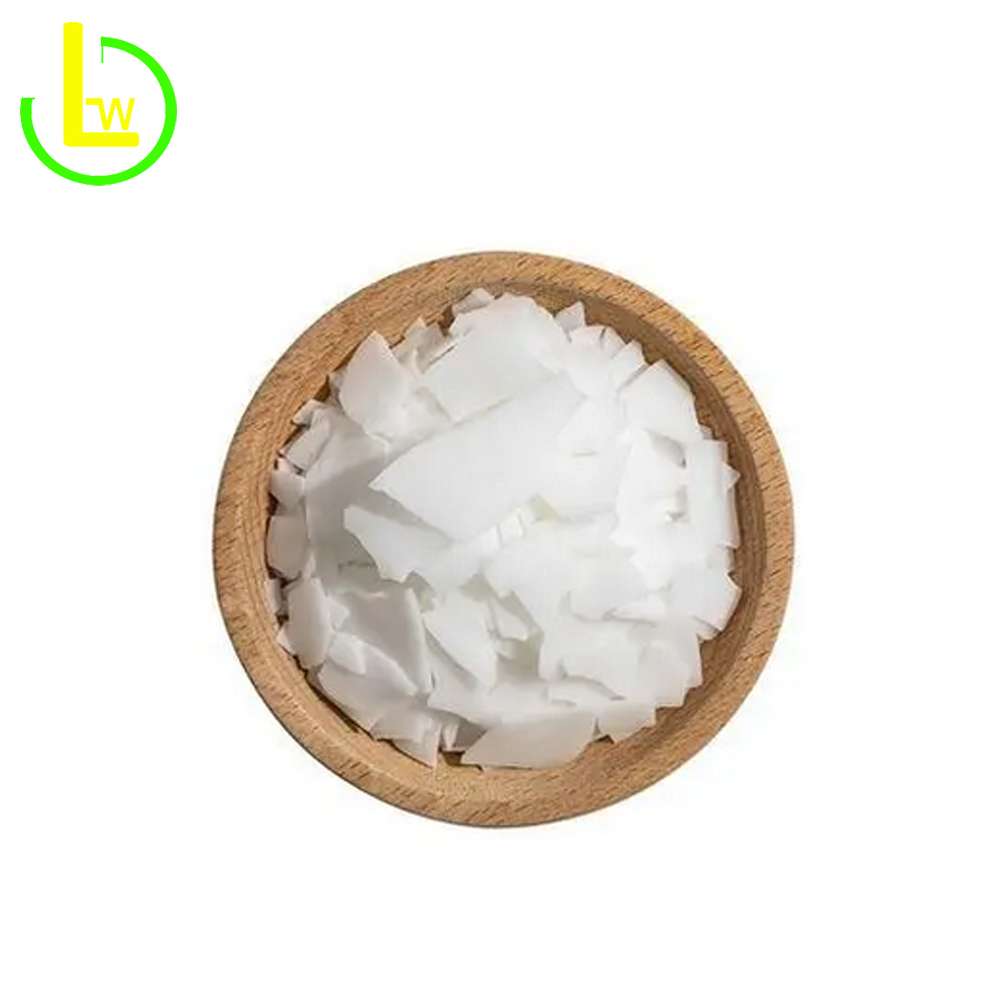
BTMS is commercially available under grade names such as BTMS-25, BTMS-50 and BTMS-80. These numbers are often treated as a simple concentration scale, leading formulators to assume that a higher grade is automatically stronger, more efficient or better suited to premium products.
That interpretation is incomplete.
In this guide, the grade number is discussed as the approximate Behentrimonium Methosulfate active basis shown in the commercial specifications reviewed. Buyers should still confirm how each supplier defines and tests its declared active matter.
The balance of a commercial BTMS material may contain Cetearyl Alcohol, Cetyl Alcohol, Stearyl Alcohol, isopropyl alcohol, Propylene Glycol, Butylene Glycol or another supplier-specific carrier system.
Changing from BTMS-25 to BTMS-50 or BTMS-80 therefore affects more than the quantity of conditioning active added. It may also change:
- the amount of fatty alcohol introduced;
- the solvent or carrier balance;
- melting and incorporation behavior;
- viscosity and emulsion structure;
- conditioner-bar hardness;
- product texture and sensory properties;
- required addition level;
- total formulation cost.
For formulation and purchasing purposes, the grade number should be treated as the beginning of product evaluation—not as the complete commercial specification.
What Is BTMS?
BTMS is the common commercial abbreviation for Behentrimonium Methosulfate-based conditioning materials.
Behentrimonium Methosulfate is a cationic cosmetic ingredient used primarily for hair-conditioning and antistatic functions. Commercial BTMS products commonly combine this conditioning active with a fatty alcohol or another carrier system.
A commercial composition may include:
- Behentrimonium Methosulfate;
- Cetearyl Alcohol;
- Cetyl Alcohol;
- Stearyl Alcohol;
- glycols;
- a supplier-specific solvent or carrier.
This means a BTMS raw material may contribute both conditioning performance and physical structure to the finished formulation.
Formulators reviewing available grades, documents and bulk packaging can visit our BTMS-25, BTMS-50 and BTMS-80 product options.
What Do BTMS-25, BTMS-50 and BTMS-80 Mean?
In commercial naming, the number generally indicates the approximate declared active matter of the supplied grade.
Typical interpretations are:
- BTMS-25: approximately 25% declared active matter;
- BTMS-50: approximately 50% declared active matter;
- BTMS-80: approximately 80% declared active matter in the reviewed supplier grades.
However, the grade name does not define one universal composition.
The commercial composition information reviewed for this guide included examples such as:
- a 25% grade combined mainly with Cetearyl Alcohol;
- a 50% grade combined with Cetearyl Alcohol;
- other 50% grades using different combinations of fatty alcohols and glycols;
- an 80% grade using isopropyl alcohol as the remaining carrier;
- another 80% grade using Cetearyl Alcohol and Propylene Glycol.
This leads to an important sourcing principle:
Two products carrying the same BTMS grade name may have a similar declared active matter but different complete compositions.
Before treating two products as interchangeable, buyers should compare:
- complete INCI or composition;
- declared active-matter specification;
- fatty alcohol or carrier system;
- Free Amine limit;
- physical form;
- test methods;
- processing and storage information.
Commercial BTMS Is More Than One Active Ingredient
The accompanying fatty alcohol or carrier can significantly affect the finished formulation.
Fatty Alcohol Contribution
Cetearyl Alcohol, Cetyl Alcohol and Stearyl Alcohol may contribute:
- viscosity;
- emulsion structure;
- creamy texture;
- product body;
- conditioner-bar hardness;
- consistency;
- sensory character;
- melting behavior.
When a formulator switches from BTMS-25 to a smaller amount of BTMS-50, the target conditioning-active level may be maintained, but considerably less fatty alcohol may enter the formula through the BTMS raw material.
That missing structural contribution may need to be replaced separately.
Solvent or Glycol Contribution
Some higher-active commercial grades may contain:
- isopropyl alcohol;
- Propylene Glycol;
- Butylene Glycol;
- another supplier-defined carrier.
These systems should not be expected to contribute the same viscosity, hardness or processing behavior as a fatty-alcohol-rich conditioning wax.
For example, an 80% grade containing isopropyl alcohol may behave differently from another 80% grade containing Cetearyl Alcohol and Propylene Glycol, even when both have a similar declared active matter.
BTMS-25 vs BTMS-50 vs BTMS-80 Comparison
| Criteria | BTMS-25 | BTMS-50 | BTMS-80 |
|---|---|---|---|
| Declared Active Matter | Approximately 25% in the reviewed commercial grade | Approximately 50%, depending on supplier specification | Approximately 80% in the reviewed supplier grades |
| Remaining Composition | Often contains a relatively high fatty-alcohol proportion | May contain Cetearyl Alcohol, Cetyl Alcohol, glycols or another supplier-specific system | Supplier-specific; reviewed examples used different carrier systems |
| Fatty-Alcohol Contribution | Generally higher at the same active target | Lower than BTMS-25 at the same active target | Depends strongly on the actual carrier system |
| Addition for the Same Active Target | Highest | Lower than BTMS-25 | Lowest by preliminary active-matter calculation |
| Formulation Conversion | Cannot replace higher grades on a 1:1 basis | Requires adjustment of declared active matter and structural carrier balance | Requires full review of composition, carrier and processing |
| Free Amine Review | Confirm supplier specification | Particularly relevant for odor-sensitive or tightly controlled projects | Confirm supplier-specific limit and method |
| Typical Physical Form | Flakes or pellets, depending on supplier | Flakes or pellets, depending on supplier | White flakes in the reviewed supplier information |
| Main Buying Risk | Underestimating the fatty alcohol introduced | Assuming every BTMS-50 product has the same composition | Assuming BTMS-80 is one universally standardized product |
| Documents to Review | COA, TDS, composition/INCI and active specification | COA, TDS, composition/INCI, Free Amine and carrier system | COA, TDS, full composition, carrier declaration, Free Amine and handling data |
This comparison describes commercial purchasing considerations rather than universal formulation rules. Every grade should be evaluated against its current supplier documentation and tested in the intended system.
Why a Higher BTMS Grade Is Not Automatically Better
A higher declared active matter generally reduces the quantity of commercial raw material required to reach a target conditioning-active level.
However, it does not necessarily produce a better formula.
The Formula May Need the Fatty Alcohol
A BTMS-25 grade may introduce a substantial quantity of fatty alcohol along with the conditioning active.
That fatty alcohol may already be performing important functions in the formulation, including:
- building viscosity;
- stabilizing the emulsion;
- increasing conditioner-bar hardness;
- creating a creamy texture;
- influencing rinse feel.
Replacing it with a smaller amount of BTMS-50 or BTMS-80 may remove part of this structural contribution.
Composition May Matter More Than the Number
Two BTMS-50 materials may not perform identically if they use different fatty alcohol or glycol systems.
Likewise, two BTMS-80 materials may have the same approximate declared active matter but different carriers and physical behavior.
The most important question is not only:
What grade is it?
It is also:
What is the complete composition behind that grade?
How to Calculate Equivalent Declared Active Matter
These calculations are preliminary and assume that the supplier’s declared active basis is technically comparable.
The initial quantity comparison can be calculated using:
Required Commercial BTMS Grade =
Required Declared Active Matter ÷ Grade Active Fraction
Suppose a formulation requires 2 kg of declared BTMS active matter.
Using a nominal BTMS-25 grade:
2 ÷ 0.25 = 8.00 kg of BTMS-25Using a nominal BTMS-50 grade:
2 ÷ 0.50 = 4.00 kg of BTMS-50Using a nominal BTMS-80 grade:
2 ÷ 0.80 = 2.50 kg of BTMS-80The calculation shows how much commercial material is theoretically required to provide the same declared active quantity.
It does not prove that the resulting formulations will have the same:
- viscosity;
- fatty-alcohol content;
- hardness;
- emulsion structure;
- melting behavior;
- sensory profile;
- finished-product stability.
For example, based on simplified reviewed compositions:
- 8 kg of a 25/75 grade may introduce approximately 6 kg of fatty alcohol;
- 4 kg of a 50/50 grade may introduce approximately 2 kg of fatty alcohol;
- 2.5 kg of an 80% grade may introduce a different carrier system entirely.
Declared active-matter equivalence is therefore only the first calculation. The remaining formula must still be rebalanced.
Can BTMS-25 and BTMS-50 Replace Each Other?
BTMS-25 and BTMS-50 should not be substituted on a 1:1 weight basis.
An initial conversion can be calculated from the target declared active level, but the accompanying fatty-alcohol contribution must also be reviewed.
For example, 4% of a nominal 50% grade contributes approximately:
4% × 0.50 = 2% declared active matterTo reach the same theoretical active level with BTMS-25:
2% ÷ 0.25 = 8% BTMS-25The new formula would therefore use approximately 8% BTMS-25 instead of 4% BTMS-50.
However, the higher BTMS-25 addition may introduce substantially more fatty alcohol, potentially changing:
- viscosity;
- waxiness;
- firmness;
- emulsion structure;
- rinse feel;
- deposition;
- manufacturing behavior.
The reverse change also requires adjustment. Replacing BTMS-25 with a smaller quantity of BTMS-50 may reduce the structural fatty alcohol contributed by the BTMS raw material.
Separate Cetearyl Alcohol or another structural ingredient may be needed to restore:
- viscosity;
- conditioner-bar hardness;
- product body;
- emulsion stability;
- appearance and texture.
Any grade substitution should therefore be treated as reformulation rather than a simple raw-material exchange.
Where BTMS-80 Fits
BTMS-80 can be evaluated as a higher-active commercial grade, but the name does not define one universal composition.
The supplier information reviewed for this guide included two different 80% products:
- one using approximately 80% declared active matter with isopropyl alcohol as the remaining carrier;
- another using approximately 80% declared active matter with Cetearyl Alcohol and Propylene Glycol.
Both were described as white flakes.
This demonstrates that BTMS-80 is not simply BTMS-50 with a higher active number. Its carrier system may be fundamentally different.
Before evaluating BTMS-80, buyers should confirm:
- actual active-matter range;
- complete composition;
- complete INCI, where applicable;
- carrier or solvent system;
- Free Amine limit;
- moisture;
- physical form;
- melting and handling behavior;
- storage and transport conditions;
- suitability for the intended cosmetic market.
BTMS-80 may reduce the quantity of commercial raw material required, but it should not be introduced into an existing BTMS-25 or BTMS-50 formulation without full technical evaluation.
Why the Complete INCI Matters
The commercial name “BTMS-50” does not establish the complete ingredient composition.
Depending on the supplied material, the composition may include:
- Behentrimonium Methosulfate and Cetearyl Alcohol;
- Behentrimonium Methosulfate and Cetyl Alcohol;
- Behentrimonium Methosulfate with fatty alcohol and glycol components;
- another supplier-specific carrier system.
The complete INCI or composition affects:
- finished-product labeling;
- formulation balance;
- texture and viscosity;
- substitution decisions;
- customer documentation;
- regulatory review;
- troubleshooting.
Two materials should not be considered equivalent until their full compositions and release specifications have been compared.
Why Free Amine Should Be Reviewed
Free Amine is one of the quality indicators that may appear in a commercial BTMS specification, particularly for BTMS-50.
Buyers should distinguish between:
- the supplier’s standard release limit;
- its normal production range;
- the actual result of one batch;
- a tighter customer-agreed requirement.
A low result on one COA does not prove that the same limit will be guaranteed for future production.
This point may be relevant in odor-sensitive formulations, but Free Amine should always be reviewed together with declared active matter, complete composition, physical properties and batch consistency.
Flakes, Pellets and Other Physical Forms
BTMS may be supplied as flakes, pellets or granules. Physical form can affect weighing, package flow, dust generation, melting and production handling, but it does not independently determine declared active matter or composition.
Flakes may be convenient for manual weighing and visual inspection, while pellets or granules may provide more uniform handling in some production systems. Actual performance depends on particle size, hardness, packaging and storage.
Buyers should confirm the supplied form, tendency to cake, package type, storage conditions and recommended incorporation procedure. A different physical form may require handling adjustments even when the chemical specification remains unchanged.
How to Compare BTMS Cost Correctly
Price per kilogram alone may be misleading.
These calculations are preliminary and assume that the supplier’s declared active basis is technically comparable.
The first useful calculation is:
Cost per kg of Declared Active Matter =
Product Price per kg ÷ Grade Active Fraction
For example:
BTMS-25 active cost = Price per kg ÷ 0.25BTMS-50 active cost = Price per kg ÷ 0.50BTMS-80 active cost = Price per kg ÷ 0.80However, this calculation does not assign commercial value to the accompanying fatty alcohol, glycol or other carrier.
A complete comparison should also consider:
- separate fatty-alcohol cost;
- practical use level;
- reformulation and validation work;
- heating and processing requirements;
- packaging;
- freight;
- MOQ;
- batch consistency;
- raw-material losses;
- finished-product performance.
A lower cost per kilogram of declared active matter does not always produce a lower total formulation cost.
What Buyers Should Check on the COA and TDS
Product Identity
Confirm:
- BTMS grade;
- product code;
- complete INCI or composition;
- batch number;
- supplied physical form.
Declared Active Matter
Review:
- specification range;
- actual batch result;
- test method;
- reporting basis.
The number in the grade name should not replace the actual release specification.
Free Amine
Confirm:
- standard release limit;
- actual batch result;
- test method;
- normal production range;
- whether a tighter limit is standard or customized;
- whether the same limit can be maintained for future batches.
Fatty Alcohol and Carrier Composition
Request clarification of any relevant components, including:
- Cetearyl Alcohol;
- Cetyl Alcohol;
- Stearyl Alcohol;
- isopropyl alcohol;
- Propylene Glycol;
- Butylene Glycol;
- other declared carriers.
pH
A pH result should be compared only when the sample concentration and preparation procedure are defined.
For example, a specification may report pH for a 1% aqueous dispersion rather than for the untreated solid product.
Physical Controls
Depending on the supplied grade, useful fields may include:
- appearance;
- color;
- odor;
- moisture;
- melting range;
- acid value;
- particle or flake form;
- dispersion or incorporation instructions.
Sample-to-Bulk Consistency
Confirm that:
- the sample represents the proposed commercial specification;
- the same composition applies to bulk supply;
- commercial batches use the same release limits;
- a batch-specific COA will be issued for shipped material.
Questions to Ask a BTMS Supplier
Before requesting a sample or placing an order, buyers should confirm:
- What is the actual declared active-matter specification?
- How does the supplier define the grade number?
- What is the complete INCI or composition?
- Which fatty alcohol or carrier system is used?
- What is the Free Amine release limit?
- What is the normal Free Amine production range?
- Which analytical methods are used?
- How is pH measured?
- What physical form is supplied?
- What melting or incorporation procedure is recommended?
- Does the sample represent the commercial bulk specification?
- Can the same release limits be maintained for future orders?
- Is customized specification control available?
- What are the MOQ and lead time?
- Which documents can be provided?
Providing the current formulation, intended application and existing supplier specification will make grade comparison more accurate.
Practical Grade Selection Summary
BTMS-25 may be considered when:
- the formulation benefits from a relatively high fatty-alcohol contribution;
- the product structure has already been validated with a 25% grade;
- the target active level can be reached at a practical use rate;
- replacing the structural contribution would add unnecessary complexity.
BTMS-50 may be considered when:
- a higher active density is required;
- the formulator wants more independent control over fatty-alcohol addition;
- the formula is already designed around a 50% commercial grade;
- declared active matter, Free Amine and composition can be aligned with project requirements.
BTMS-80 may be considered when:
- a high-active commercial material is appropriate;
- the complete carrier system is known;
- the manufacturing process can safely and accurately handle the grade;
- the formulation is developed or revalidated around the specific supplier composition.
For every grade, buyers should confirm:
- actual declared active matter;
- complete composition;
- fatty-alcohol or carrier system;
- Free Amine;
- physical form;
- test methods;
- processing requirements;
- sample-to-bulk consistency;
- documentation and commercial conditions.
The main sourcing principle is:
Select BTMS according to the complete commercial specification—not according to the number in the grade name alone.
Bulk BTMS Grade Supply
Lifeworth supplies BTMS-25, BTMS-50 and selected BTMS-80 commercial grades for qualified cosmetic-formulation and bulk-sourcing projects.
Supply discussions may include:
- grade selection;
- declared active-matter comparison;
- complete composition review;
- Free Amine requirements;
- representative samples;
- batch COA;
- TDS and SDS/MSDS;
- flakes or pellet form;
- packaging and labeling;
- trial and commercial quantities;
- export documentation.
Buyers with an existing specification, current supplier COA or formulation requirement can send it for comparison before arranging a sample or bulk order.
Review our bulk BTMS grade supply details or contact our ingredient sales team with your required grade, application, quantity and destination market.
References
- European Commission CosIng Database. Behentrimonium Methosulfate – Cosmetic Ingredient Functions.
- Cosmetic Ingredient Review. Safety Assessment of Behentrimonium Methosulfate.
- Commercial BTMS composition and specification information reviewed for BTMS-25, BTMS-50 and BTMS-80 grades.
