
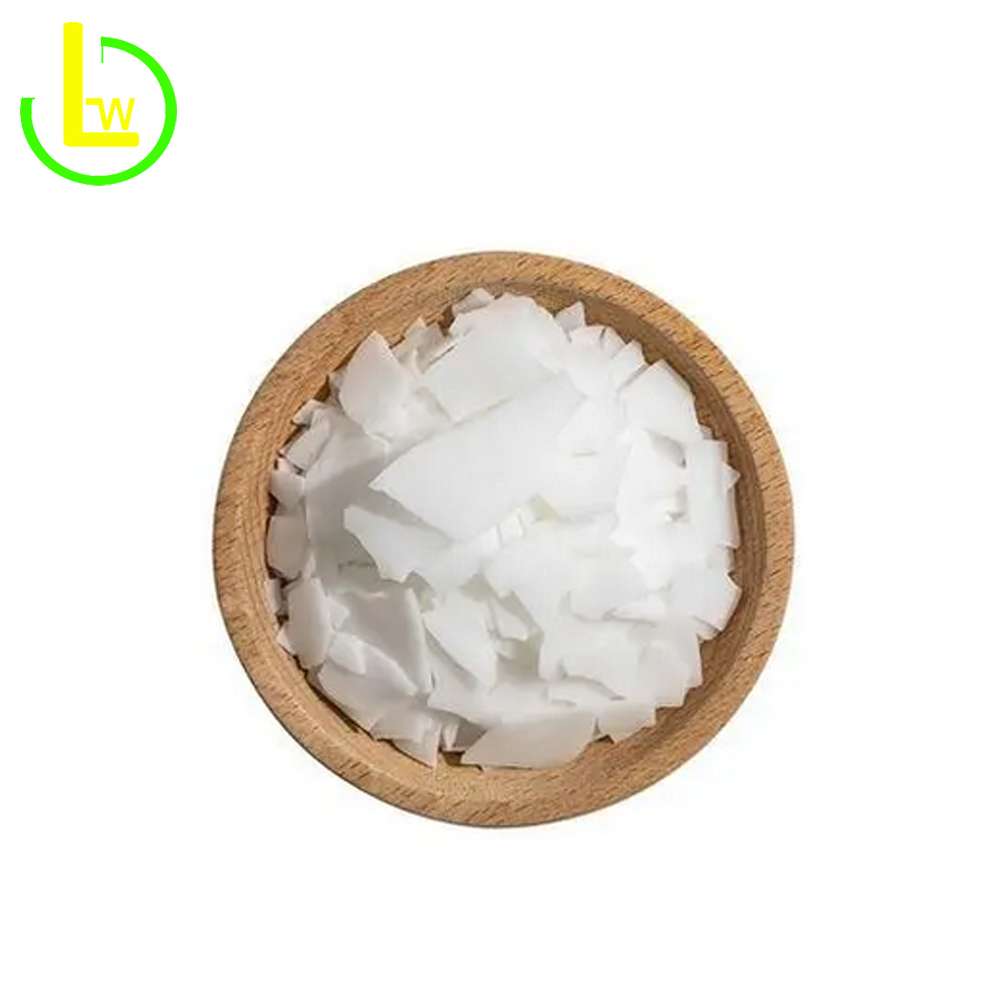
Free Amine is one of the quality indicators that may appear on a BTMS-50 Certificate of Analysis. It can become especially important when a buyer is concerned about raw-material odor, finished-product sensory quality or consistency between commercial batches.
However, one low COA result can easily be misunderstood.
For example, a batch may show a Free Amine result of 0.46%. A buyer may then assume that all future batches can be supplied at no more than 0.5%.
That conclusion is not necessarily correct.
The supplier’s normal release limit may be higher, routine production may commonly test around 0.6%–0.7%, and a guaranteed maximum of 0.5% may require customized production.
The central sourcing principle is:
A low Free Amine result on one BTMS-50 COA is not the same as a guaranteed low-Free-Amine supply specification.
Buyers should evaluate the result together with the supplier’s standard specification, normal production range, test method and ability to maintain the requested limit for future orders.
What Is Free Amine in BTMS-50?
BTMS-50 is a commercial conditioning material based on Behentrimonium Methosulfate, usually combined with a fatty alcohol or another carrier system.
Free Amine is a quality-control parameter used to monitor residual amine-related material in the finished commercial product. It is separate from the declared active-matter result and should not be used as the only measure of BTMS-50 quality.
A complete BTMS-50 evaluation may include:
- declared active matter;
- Free Amine;
- complete INCI or composition;
- fatty alcohol or carrier system;
- appearance;
- pH under defined test conditions;
- moisture;
- physical form;
- batch consistency.
A lower Free Amine value does not compensate for incorrect active matter, unsuitable composition or failure in another agreed specification.
Free Amine should therefore be treated as one important quality indicator within the full commercial specification.
Why Free Amine Matters
Buyers may monitor Free Amine because it can be relevant to raw-material odor and finished-product sensory control.
This may be particularly important for:
- unscented conditioners;
- lightly fragranced formulations;
- premium hair-care products;
- products with strict internal odor standards;
- projects requiring consistent sensory performance between batches.
The practical effect of a Free Amine difference cannot be predicted from the COA number alone. It may depend on:
- the BTMS-50 use level;
- complete formula composition;
- fragrance level;
- product pH;
- manufacturing process;
- packaging;
- storage conditions;
- the buyer’s sensory acceptance criteria.
For this reason, buyers should evaluate both the raw-material specification and the finished formula produced with a representative commercial batch.
Batch Result vs Guaranteed Specification
The most common misunderstanding is treating different Free Amine numbers as if they all have the same commercial meaning.
They do not.
| Term | Meaning |
|---|---|
| Standard Release Limit | The maximum value allowed under the supplier’s normal BTMS-50 specification |
| Normal Production Range | The results commonly observed during routine manufacturing |
| Actual Batch Result | The result measured for one specific batch |
| Customer-Agreed Limit | A tighter maximum formally accepted for a particular customer or project |
Consider this example:
- Supplier’s normal release limit: below 1.0%
- Routine production results: approximately 0.6%–0.7%
- One batch result: 0.46%
- Customer requirement: no more than 0.5%
The result of 0.46% proves that one batch achieved 0.46%.
It does not prove that:
- 0.5% is the supplier’s normal release limit;
- routine production is always below 0.5%;
- future batches will automatically meet 0.5%;
- the supplier has accepted 0.5% as a fixed commercial commitment.
A batch result is an observation. A release specification is a supply commitment.
The two should not be confused.
A COA should ideally show both the applicable limit and the actual result:
| Test Item | Specification | Result |
|---|---|---|
| Free Amine | ≤1.0% | 0.46% |
In this example, the batch complies because the result is below the standard limit of 1.0%.
It does not mean that all future batches are guaranteed below 0.5%.
Is 0.6% Free Amine Acceptable?
The answer depends on two separate questions.
Does It Meet the Agreed Specification?
If the agreed specification is:
Free Amine: ≤1.0%then a result of 0.6% complies.
If the agreed customer requirement is:
Free Amine: ≤0.5%then a result of 0.6% does not comply.
The difference may appear small, but specification compliance is determined by the agreed limit.
A supplier should not describe 0.6% as acceptable merely because it is close to 0.5% when the commercial agreement clearly requires no more than 0.5%.
Does It Work in the Finished Formula?
This is a separate technical question.
A result of 0.6% may still perform acceptably in some formulations, while another buyer may reject it because of a stricter sensory or internal quality requirement.
The practical result may depend on:
- formulation type;
- BTMS-50 dosage;
- fragrance system;
- finished-product odor;
- storage behavior;
- internal quality standard.
Therefore, technical usability and contractual compliance should be evaluated separately.
A material may work in the formula but still fail the agreed specification. Conversely, a material may meet the numerical limit but still require finished-product testing.
Why a Limit of ≤0.5% May Require Customized Production
A tighter Free Amine limit may fall outside the supplier’s routine production and release system.
Standard BTMS-50 production is usually organized around:
- established manufacturing conditions;
- normal batch sizes;
- standard raw-material controls;
- standard analytical methods;
- standard release limits.
When a buyer requests a tighter maximum, the manufacturer may need to arrange:
- additional process control;
- separate production scheduling;
- tighter batch selection;
- extra testing;
- dedicated batch segregation;
- a minimum customized production quantity.
This creates a practical commercial issue.
A buyer may want:
- 25 kg for evaluation;
- 300 kg for the first order;
- annual demand of 300–400 kg;
- every batch guaranteed at no more than 0.5%.
The manufacturer may require a dedicated production batch of approximately 800 kg to accept that tighter limit.
The buyer may not be able to consume 800 kg within the shelf-life period, while the manufacturer may not be able to produce a dedicated 25 kg batch economically.
This is not only an MOQ issue. It is also an inventory-risk question.
The parties need to agree on:
- minimum production quantity;
- customer purchase quantity;
- ownership of the remaining stock;
- storage responsibility;
- shelf-life risk;
- batch testing;
- future call-off arrangements.
A tighter specification is only commercially workable when the production and inventory plan is also workable.
Representative Sample vs Customized Sample
Sample approval is important, but buyers should understand what the sample represents.
A sample may be:
- taken from routine commercial production;
- selected from an existing low-result batch;
- specially prepared in the laboratory;
- produced as a customized trial.
These sample types do not carry the same supply meaning.
Before relying on a low Free Amine sample, buyers should confirm:
- whether it came from normal production;
- whether the same composition will apply to bulk supply;
- whether bulk batches will use the same release limit;
- whether the same analytical method will be used;
- what MOQ applies to the requested specification.
A specially prepared sample may prove technical feasibility, but it does not automatically establish commercial supply capability at a small order quantity.
What Buyers Should Check on the COA
The COA should clearly separate the specification limit from the actual batch result.
Free Amine Entry
Confirm:
- standard maximum limit;
- actual batch result;
- test method;
- reporting basis.
A result without an applicable specification gives incomplete commercial information.
Test Method
Results should be compared only when the test method is consistent.
Buyers should confirm that:
- samples and bulk batches use the same method;
- the reporting basis is unchanged;
- routine production testing follows the same procedure;
- retesting rules are defined.
Batch Identification
The COA batch number should match:
- product labels;
- drum or carton markings;
- packing documents;
- shipped material.
A COA from a previous batch should not be used as proof of the result for a new shipment.
Written Specification
When a tighter Free Amine limit is essential, it should appear in the approved commercial documents.
Depending on the project, this may include:
- approved product specification;
- quotation;
- purchase order;
- quality agreement;
- batch COA.
Statements such as “we will try our best” do not create a measurable specification.
Standard vs Customized BTMS-50
| Standard BTMS-50 May Be Suitable When | Customized Low-Free-Amine BTMS-50 May Be Needed When |
|---|---|
| The standard limit meets the buyer’s requirement | Every future batch must meet a tighter fixed limit |
| The finished formula passes odor evaluation | Low-odor consistency is a formal project requirement |
| Smaller quantities and prompt delivery are priorities | Commercial volume can support dedicated production |
| A tighter contractual maximum is unnecessary | The buyer accepts the related MOQ, lead time and testing |
| Routine commercial consistency is acceptable | The limit must be written into the approved specification |
A customized option should not be selected only because one historical batch happened to show a low result.
The decision should be based on whether the tighter limit is technically necessary, commercially sustainable and formally agreed.
Six Questions to Ask a BTMS-50 Supplier
Before approving a supplier, buyers should ask:
- What is the standard Free Amine release limit?
- What range is normally observed in routine production?
- Is the proposed sample representative of commercial production?
- Can the requested maximum be guaranteed for every shipment?
- What analytical method is used?
- What MOQ and production conditions apply to a customized limit?
These questions are usually more useful than asking only for the lowest historical COA result.
Practical Buyer Conclusion
Free Amine is a useful BTMS-50 quality indicator, but it must be interpreted within the correct commercial context.
Buyers should distinguish between:
- the supplier’s standard release limit;
- normal routine-production results;
- one batch’s actual value;
- a customer-specific guaranteed maximum.
A batch result of 0.46% does not automatically establish a permanent specification of no more than 0.5%.
Similarly, a result of 0.6% may comply with a standard limit below 1.0%, but it does not comply with a separately agreed maximum of 0.5%.
The purchasing decision should consider:
- analytical compliance;
- finished-product testing;
- batch consistency;
- test method;
- order quantity;
- customized production requirements;
- written specification control.
The main sourcing principle is:
Buy BTMS-50 according to a clearly agreed release specification—not according to the best result shown on one historical COA.
BTMS-50 Supply and Specification Review
Lifeworth supplies BTMS-50 for cosmetic formulation and bulk sourcing projects, with specification and documentation review available before commercial ordering.
Supply discussions may include:
- declared active matter;
- Free Amine requirement;
- complete INCI or composition;
- fatty alcohol system;
- representative samples;
- batch-specific COA;
- TDS and SDS/MSDS;
- standard or customized specifications;
- trial and commercial quantities;
- packaging and export documentation.
Buyers with an existing COA, current supplier specification or internal Free Amine requirement can send it for comparison.
Review our BTMS-50 product and grade information or contact our ingredient sales team with your required specification, quantity, application and destination market.
References
- Cosmetic Ingredient Review. Behentrimonium Methosulfate Ingredient Review and Safety Assessment of Trimoniums.
- European Commission. CosIng Cosmetic Ingredient Database.
- Commercial BTMS-50 specifications, batch COAs and customized sourcing cases reviewed for this article.
